

I have a bit of a confession to make.
I’ve lived in Barcelona for seven years. Almost eight. And I’ve never, in all that time, been to Sagrada Familia.
Of course, I’ve walked past it. It’s the nearest major tourist attraction to my house, in barrio de Clot.
So I’ve seen the outside plenty of times.
Covered in scaffolding and partially complete, it’s taller than everything around it, and visible from all over the city. And it recently got even taller: just last week, the news reported that Sagrada Familia was finally finished.

So I’ve seen the outside. But I’ve never done the tour. I have an objection to paying 26 to 40 euros – or more – to visit something that’s right in my own neighborhood. So I haven’t been.
If you’d like, you can sign up for a guided tour with Walks Tours, which I’m sure is spectacular.
(People online suggest that the best time to go is in the afternoon, to get the full effect of the light coming through the stained glass.)
Okay, Sagrada Familia is not really finished
Okay, let me walk back a couple of my previous statements.
I’ve technically been inside Sagrada Familia. And it’s not really finished.
But last week they put the top on the highest tower, Torre de Jesucristo, making Sagrada Familia the world’s tallest church, at 172.5 meters.
(It actually surpassed Ulm Minster, a Lutheran church up in Ulm, Germany, in October 2025.)
It’s also, depending on how you look at it, the tallest building in Barcelona.
(There’s a communications tower that’s taller, up in Collserola. But that’s not a building, per se. And out in Sant Adrià de Besòs there’s an old power plant that’s 208 meters tall. It’s currently abandoned, and anyway, not in Barcelona. But you’ll see it if you go out that way.)
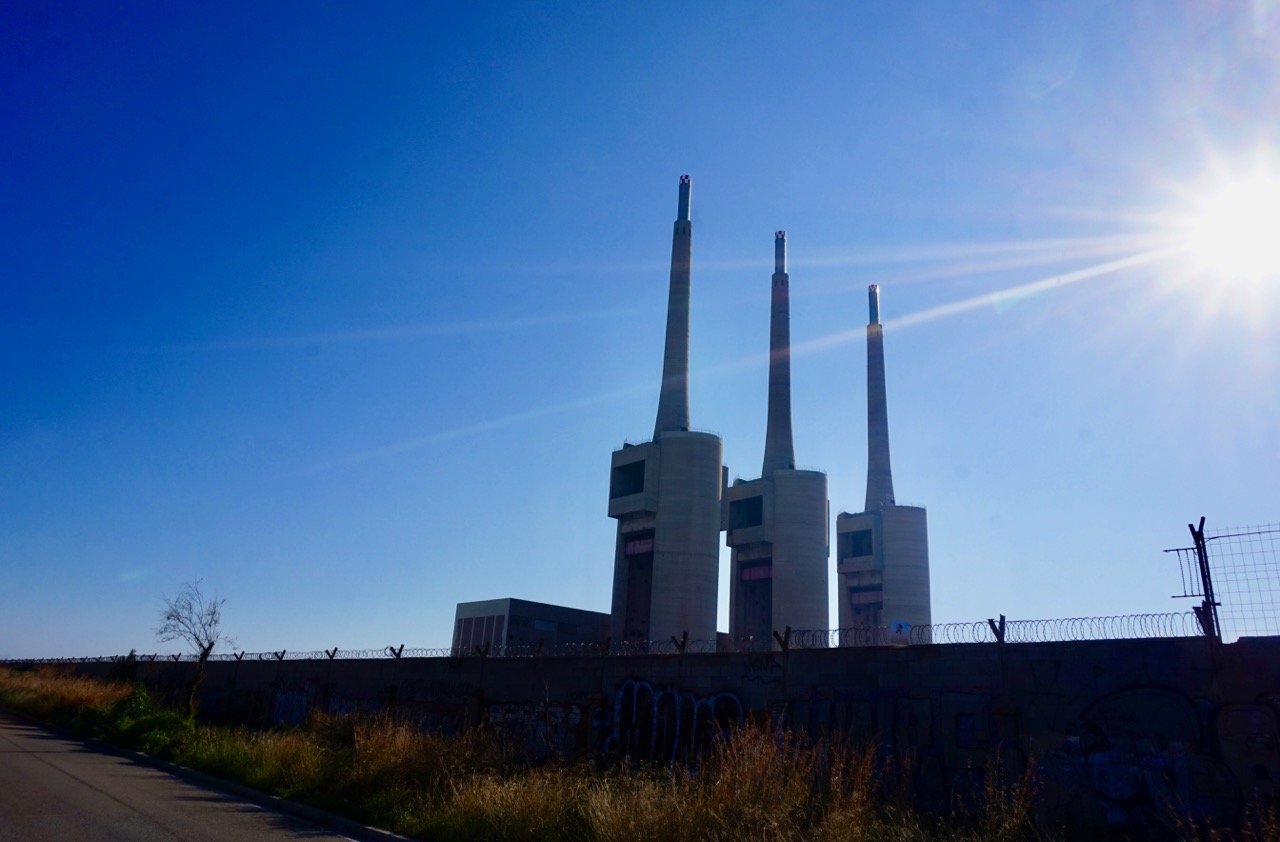
In any case, 144 years after construction began, Sagrada Familia is now – almost – finished.
Current estimates say that construction will continue in the basilica’s interior through 2027 and 2028. And there’s also a controversial plan for a staircase crossing Calle Mallorca, which might or might not be done by 2034.
If the staircase plan moves forward, several buildings will have to be demolished, and around 3000 people would be evicted from their homes. I’m sure the anti-gentrification crowd would have a field day. The case is most likely going to end up in court – the “Gloria” façade on Calle Mallorca isn’t anywhere near done, so we’ll see.
In the meantime, Sagrada Familia is still covered in scaffolding and looks to be far from complete.
Life around Sagrada Familia
I mentioned that I have technically been inside Sagrada Familia: last year I went to mass in the crypt, which isn’t as exciting as I was expecting. It’s a bit small, and underground, and cryptlike.
The access is on Carrer de Sardenya, on the corner with Provença. There are multiple masses on most days, in Spanish and Catalan. Look for “Parroquia de la Sagrada Familia” on misas.org if you’re into that sort of thing.
Otherwise, I don’t generally spend a lot of time around Sagrada Familia. It’s constantly slammed with people – watch out for pickpockets – and surrounded by all sorts of fast food restaurants I never go to.
In December they have a Christmas market outside. That’s also pretty crowded, and has a lot of stuff for making your own nativity scene. If you want to buy moss, and slabs of cork, and tiny figures of camels, I guess that’s the place to go.
Also, the full Basilica has an international mass on Sundays at 9AM. I’ve tried to go for that a couple of times, but space is limited and it’s always been full when I arrive at 8:30-ish. So I guess you need to get there earlier if you want to get in.
If you’re in the area during normal tourist hours, you’ll probably spend the whole time dodging Instagram selfie artists, and making sure you still have your wallet.
Must-see Barcelona attractions!
The fact is, a lot of people in Barcelona are a bit ambivalent about these architectural monuments.
If you live here, you probably want to avoid elbowing your way through crowds of tourists. So you might just avoid the biggest attractions. (I’m not about to go to protests against it, but I’ll admit that over-tourism is a real thing, especially in some Barcelona neighborhoods.)

Among the must-see things in Barcelona that I don’t care about at all are:
- La Pedrera – Casa Milà – this one has an exhibition space inside, where you can sometimes see nice art, but the main attraction is the building itself, on Passeig de Gràcia.
- Casa Battló – also on Passeig de Gràcia, you can barely walk past this place on weekends because of the huge crowds of tourists standing around.
- Basílica de la Sagrada Familia – as mentioned, always slammed with people and surrounded by crappy fast food restaurants. Also, those shops selling t-shirts and panties that say I ❤️ Big Dicks (or similar). Classy.
- Boqueria Market – last time I checked, this place had filled up with stands selling a kind of “Catalan burrito”, or some such monstrosity, which was only invented two years ago so that people could eat and walk. Presumably there are still local people who buy fish there in the mornings, but not many.
- Parc Güell – Morena and I actually went here on our second day in Barcelona. It costs 18€ to get in and I remember being pretty underwhelmed.
So that’s a round-up of must-see Barcelona attractions. I remember wandering around during the pandemic, when there were no tourists, and seeing how regular Barcelona residents don’t even look up when they walk past these places.
Life of Antoni Gaudí, God’s architect
Four out of my five “Barcelona Musts” were designed by Antoni Gaudí, the godfather of Catalan architectural modernism. He’s the second topic of today’s article.
Gaudí was a pretty intense guy.
Here’s a sentence I like from Wikipedia:
When handing him his degree, Elies Rogent, director of Barcelona Architecture School, said: “We have given this academic title either to a fool or a genius. Time will show.”
At the 1878 World’s Fair in Paris, some of Gaudí’s designs caught the eye of Catalan merchant Eusebi Güell… and the rest is history. Check out Palau Güell and the aforementioned Parc if you want. There are other Güell buildings around Barcelona as well.
Gaudí’s main project was Sagrada Familia, which began construction in 1882 under a different architect. The next year, Gaudí took over and changed the original plan.
He worked almost exclusively on Sagrada Familia from 1915 until his death in 1926.
These days, the consensus is that Gaudí was a genius. And his buildings have certainly put Barcelona on the map for modernist architecture in Europe. (This year, 2026, Barcelona has actually been named the World Capital of Architecture by UNESCO. Slightly ironic, considering they can’t even build housing anymore.)
Gaudí’s later years and death
Gaudí’s Catholic faith intensified as his life went on.
And it’s always worth keeping in mind that people’s experiences and outlooks a century ago were quite different than today. Gaudí suffered from several diseases, escaped a cholera epidemic, and watched most of his friends and family die.
During Lent in 1894 he apparently almost starved himself to death. He was saved by his friend Josep Torras i Bages, the Bishop of Vic, who argued that God’s plan for him was to complete his work on the Sagrada Familia.
Gaudí got up from bed immediately, “face shining” and much relieved.
A quote from the man himself:
My good friends are dead; I have no family and no clients, no fortune nor anything. Now I can dedicate myself entirely to the Church.
He called Sagrada Familia “the cathedral of the poor” and would beg for alms to continue work on it. He also adopted a penniless holy man vibe – so much so that when he was hit by a streetcar in 1926, he was confused for a beggar and taken to a public hospital.
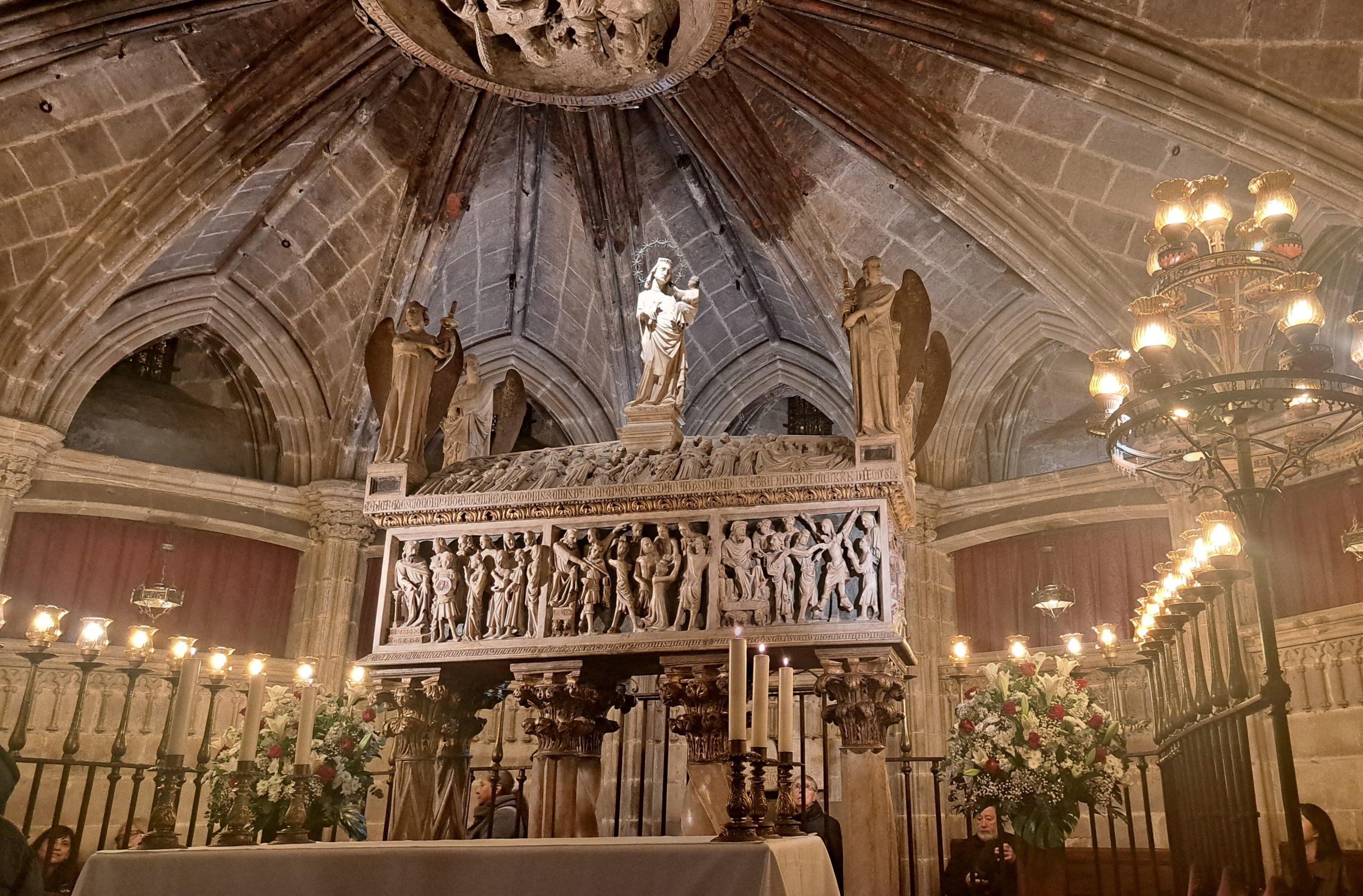
He died a few days later, and is buried in his own crypt under his masterpiece, la Basílica de la Sagrada Familia.
Sagrada Familia and the Spanish Civil War
Gaudí saw only one of Sagrada Familia’s towers completed.
He knew that his temple would be finished by future generations, so he left plans behind.
In 1936, at the beginning of the Spanish Civil War, some anarchists broke in and burned Gaudí’s workshop, including most of his sketches and plans.
There were, however, photos of some of the scale models Gaudí had made during his lifetime.
Those escaped the fire.
His work was carried on by other architects after Franco won the Civil War. So what we’re seeing today is a reconstruction of what Gaudí probably intended the building to look like.
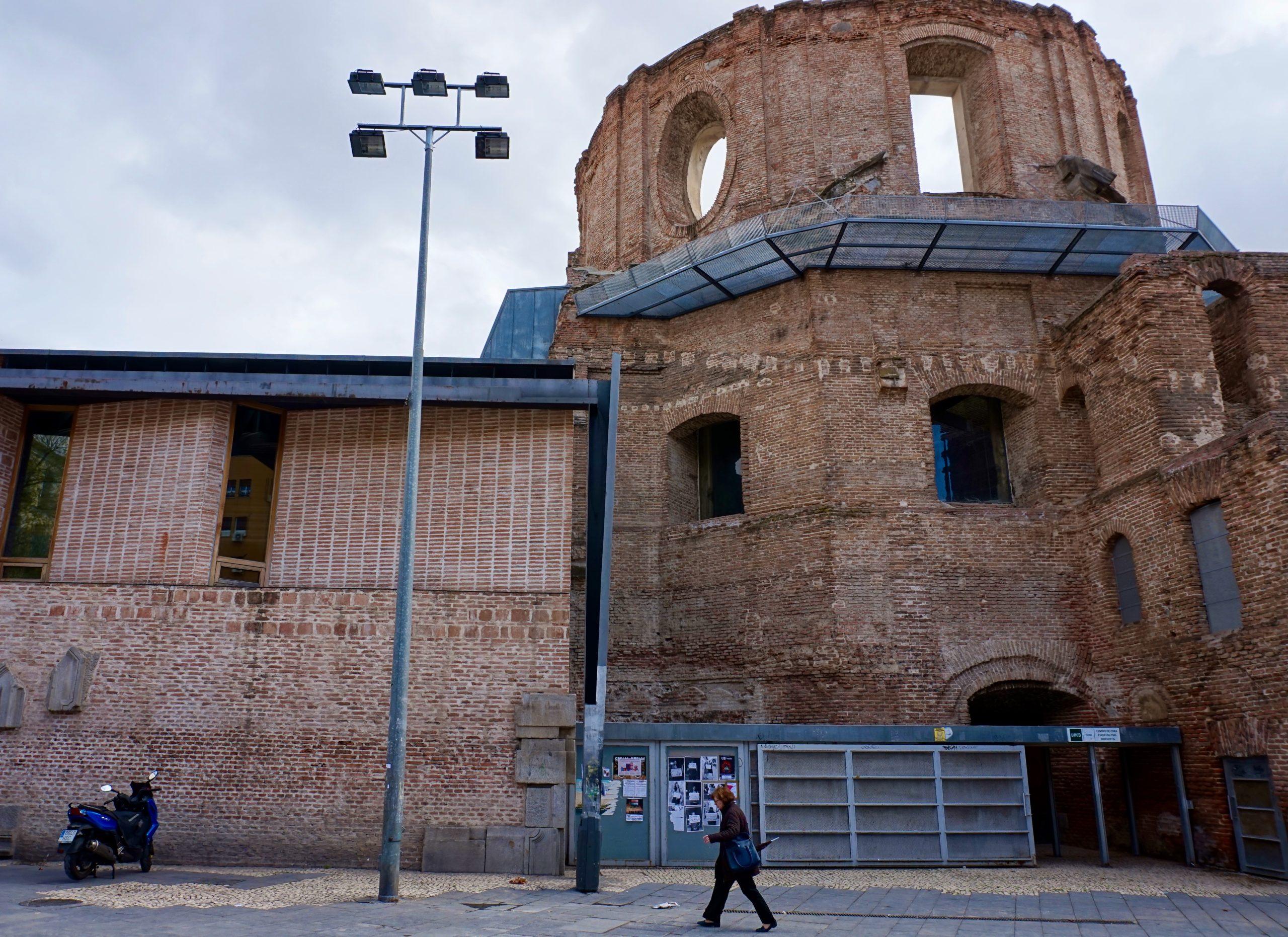
(As to why the anarchists were burning churches at every opportunity, well, I guess it’s a long story. But they burned churches and killed priests and nuns anywhere they could. They might have been more popular if they’d concentrated on something else, but who knows? It was a long time ago.)
When George Orwell visited Barcelona during the Civil War, he declared that Sagrada Familia was “one of the most hideous buildings in the world”. He went on to say, “I think the Anarchists showed bad taste in not blowing it up when they had the chance.”
More on all that in my article on Homage to Catalonia.
Antoni Gaudí’s strange afterlife
A few months ago I met up with a Chinese girl who had only been in Barcelona for a couple of days.
I offered to walk her up to see Sagrada Familia, but she’d never heard of it. I pulled up a picture on my phone and showed it to her. “Oh…” she said, “Gaudí!”
I got the impression that in China they usually refer to the building by the name of its architect. And perhaps for good reason: the full name, Templo Expiatorio de la Sagrada Familia, doesn’t really roll off the tongue.
Sagrada Familia is a basilica, not a cathedral. Barcelona’s cathedral is named Santa Creu i Santa Eulalia and it’s in the neighborhood incorrectly referred to as Gothic.
Anyway, construction carries on, a century after Gaudí. The year 2026 has even been declared the Gaudí Year here in Barcelona. The Pope, Leo XIV, will be visiting Spain in June, and one of his stops is la Sagrada Familia, to commemorate the 100th anniversary of Gaudí’s death.
Last year, a few days before dying, Pope Francis recognized Gaudí as “venerable” due to his “heroic virtues” – that’s the first step on the path towards sainthood.
The next step, beatus, requires the performance of at least one miracle by the deceased. If you were to go and pray in front of Gaudí’s remains, down in the crypt, presumably he could intercede with God on your behalf. The miracle would need to be verified by the authorities of the Catholic Church.
This process often takes decades, or even centuries.
The long game of eternal salvation
German poet Heinrich Heine, in the first half of the 19th century, famously said:
“People in those old times had convictions; we moderns only have opinions. And it needs more than a mere opinion to erect a Gothic cathedral.”
Gaudí had conviction, but it was probably a rare thing in his day – and it’s even rarer now.
I wonder what he would make of the mass tourism around his various works today. In the early 20th century, I would assume a few eccentric British people made it down to Spain to gawk at the buildings.
But Gaudí would have had no way of imagining the crowds of tourists with selfie sticks, buying sugary pastries and novelty underwear on the surrounding streets, and then using his masterpiece as a backdrop for some Instagram content. And he probably wouldn’t like it much if he could see it.
But eternity is a long time. And he may make it to sainthood one day. The trend of taking selfies in front of other people’s monuments could come to an end (or it could be replaced by something dumber).
Or they might finally take the scaffolding off Sagrada Familia. “Time will show.”
Hopefully we’ll live to see it.
Yours,
Daniel AKA Mr Chorizo.
P.S. If you want more sainthood, check out my recent article on Saint Ignaitus of Loyola. Or I’ve got a bit about the inquisition in my article on Spanish ham as a right wing dog-whistle. And as far as “heroic virtue” goes, I guess this isn’t what the Church means, but I’ve written about the stoic virtues on here. As well as about my attempts to live a life of discipline. Enjoy!
P.P.S. I don’t know if most people know anything about his life, but one way or another Antoni Gaudí is quite famous these days. Perhaps you’d like to read my article about famous Spanish people for more. And I’ve also got one where I talk about several famous Catalans. As usual, if there’s anything you’d like to see here, just let me know in the comments, or on one of my many social media profiles. Thanks.

0 comments