

Spanish ham is in the news.
And it’s probably not what you think.
The other day, the Guardian (up in the UK) published an article.
The long title: “Spanish jamón is the best ham in the world – but culture warriors are reviving its dark history”.
The author is Abbas Asaria, a Madrid-based chef and food writer.
And the “dark history” in question has to do with the politics of pork.
For hundreds of years, as you probably know, most of Spain was under Muslim rule.
When the natives rose up, and began to push the colonizers off their stolen land, they (the Spaniards) pursued their ideological enemies with zeal, a struggle known as the Reconquista.

This process took centuries, and there’s a lot one could say about it.
Today we’re going to talk about jamón ibérico – Iberian ham – and how the Spanish Inquisition might be affecting your diet, even centuries after the fact.
A bit about the Spanish Reconquista
Muslims (and, also, Jews) were driven out of Spain in 1492 – the same year that Spain became a global power due to the “discovery” of a hitherto-unkown “New World” by one Christopher Columbus.
Whether Columbus was Spanish, or Italian, or Catalan, or something else, is a boring debate I’m not going to get into here. In any case, his voyage across the Atlantic was funded by the Spanish crown – Ferdinand and Isabella, otherwise known as the Catholic Monarchs.
The title “Catholic Monarchs” is important, because part of the goal behind expelling Muslims and Jews was to enforce religious unity in the new Spain.
The reconquest was considered by several Popes to be a part of the larger movement of the Crusades. Organizations like the Knights Templar were involved in both the Holy Land crusades and the Spanish Reconquista.
El mundo es un pañuelo, in other words. And the Catholic Church was doing globalization for more than a thousand years before the term was even invented.
The Politics of Spanish Ham
So, as I was saying. In 1492, Spain was (after centuries) mostly united, as a collection of Catholic kingdoms all the way from the Pyrenees down to the southern coast.
This is all part of the origin story of Spain as we now know it: the struggle against the Muslim invaders is a huge part of traditional Spanish identity.
Later, the Spanish Inquisition pursued moriscos and conversos – Muslims and Jews who had (in theory) converted to Christianity to blend in, but whose loyalty to God, Spain, and the King was still suspect.
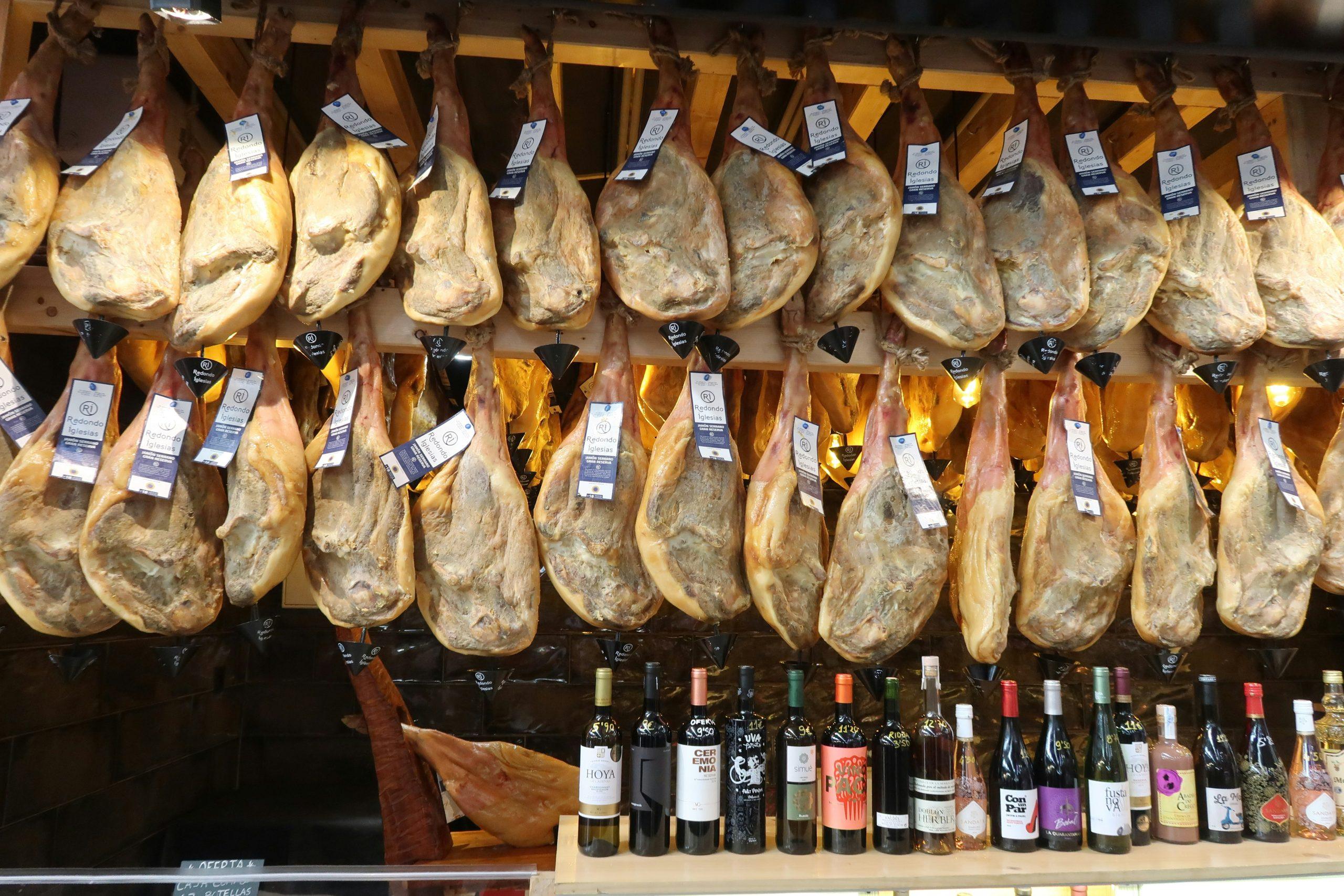
Muslims and Jews don’t eat pork, but Christians do. So eating pork in public became a sort of ideological purity test.
In other words, ham is political. And so are bacon, and chorizo, and pork rinds.
In theory, the tradition of hanging hams and sausages in prominent places comes from that time. Hang a few kilos of pork in the window and the neighbors will assume you’re a good Christian.
Maybe the Grand Inquisitor will leave you alone.
Put a row of hams up behind the bar in your tavern, and everyone will know which side of the culture war you’re on.
But what does that have to do with today?
Apparently, there’s a meme that’s going around on the Spanish internet, and it’s ruffling feathers among certain groups.
“¿Come jamón?”
It’s a simple question, often accompanied by a picture of an angry Homer Simpson. “Does he eat ham?”
In the online culture wars, ¿come jamón? is a loaded question.
If someone posts a surveillance camera video of a couple of young men robbing an old lady on the streets of Barcelona, for example, someone could chime in with “¿Come jamón?”
It’s a cryptic way of asking if the perpetrators are Muslim – based on the assumption that immigrants from Muslim countries commit a disproportionate share of the street crime in Spain.
That’s what the article in the Guardian is about: the history of ham as a symbol of Spanish identity and (in the author’s words) “a tool of social exclusion”.
I had never seen the “come jamón” meme, but I’m not really on the dark and hairy underbelly of the Spanish internet, so I guess it’s normal that I wouldn’t.
Food and “fitting in” to your social group
I’ve mentioned this elsewhere, but I used to be a vegetarian.
It wasn’t because of animals. It wasn’t because of the alleged health benefits. Basically, it was because “vegetarian” was just something everyone was doing in my social group back in the US.

This says a lot about my social group back then, and had I known better (or had the people skills) I would have probably just made different friends. But as it happened, among the people I knew in my late teens and early 20s, vegetarianism was quite mainstream.
If you wanted to be a bit more extreme, you could go vegan, or you could be a “raw foodist” or a “macrobiotic” – whatever that means.
I just wanted to fit in. So for three or four years I was a vegetarian.
The first Spanish girl I ever dated, who was (inevitably) named María, wasn’t a fan of vegetarianism.
“You won’t even try jamón ibérico?” she’d ask, incredulously. “It’s the peak of our civilization!”
Her grandparents had lived through some real hunger after the Spanish Civil War and my sitting around objecting to perfectly good food was (in her mind) ridiculous.
I later decided that she was right.
Why “the Chorizo Chronicles” isn’t a blog about celery
María dumped me after 3 or 4 months of dating. We were totally incompatible, and my stupid diet was only the tip of the iceberg.
But soon after, I discovered the wonders of Spanish cuisine – especially pork products.
Among the several reasons why I call this blog the Chorizo Chronicles is the fact that when I started, around 15 years ago, I was already embracing pork as a part of my budding Spanish identity.
I also no longer had to fit in with the people back home, who loved to lecture me about how meat is linked to cis-herteronormative masculinity vis-a-vis the patriarchy.
All this to say: food can be political. And it’s not just Spanish ham.
(By the way, I’m now – many years later – fully Spanish. And it just occurred to me that the logo for my Spain to Go podcast is a pig. How about that? It’s almost like pork is a symbol of Spain or something.)
La Reconquista and Spanish identity
You remember Torre Pacheco, last summer. Okay, you probably don’t.
But in that agricultural town in Murcia, a couple of young people of North African origin (de origen magrebí, as they say in Spanish) beat up an old guy and filmed it for viral content.
What followed was a pretty tense July weekend in which far-right activists went down to protest in Torre Pacheco, calling it a “hunt for immigrants”.
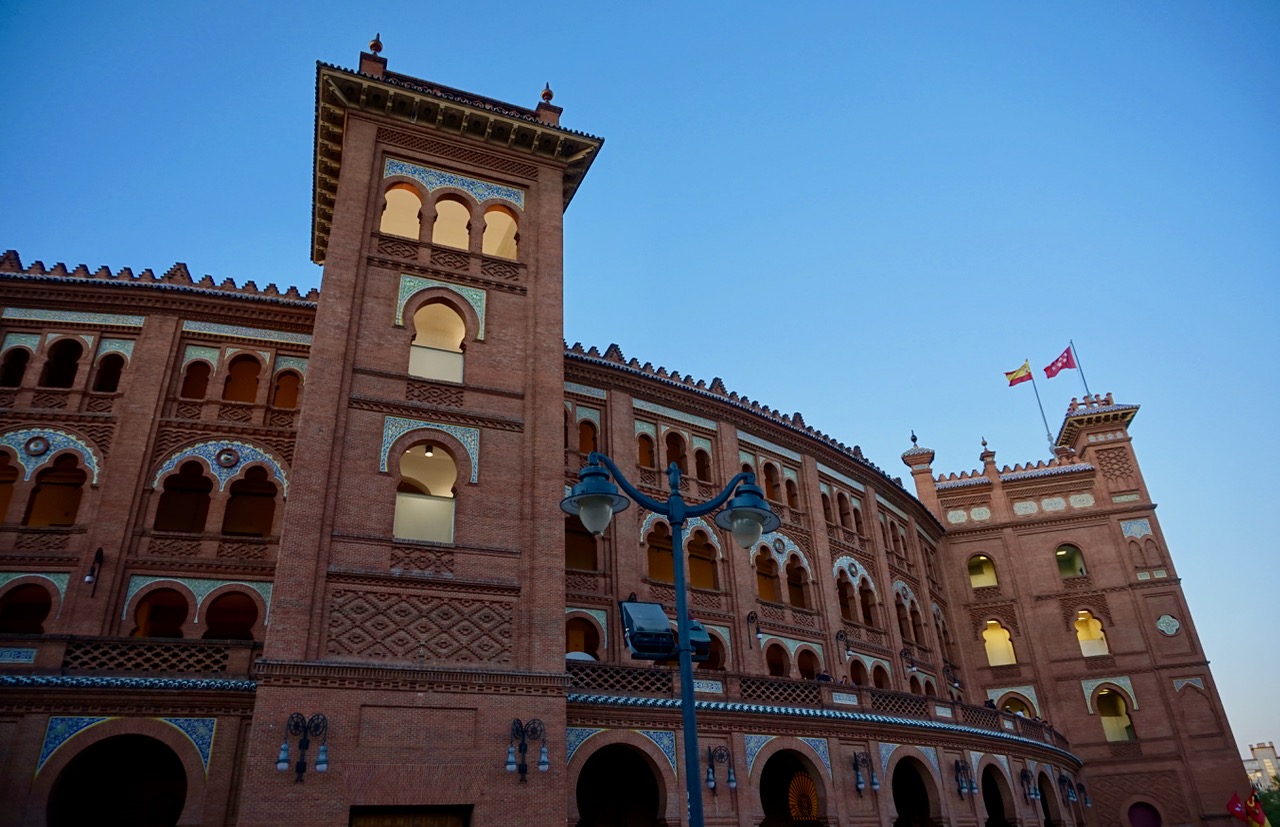
In the end, it seems the police stopped any more violence from breaking out. But the tension is indicative of a larger problem in Spanish society: not everyone is onboard with mass immigration from North Africa, and some want to take the matter into their own hands.
The author of the article in the Guardian laments that for some Spaniards, “the Inquisition hasn’t ended”.
I think you could phrase that a bit more generously, and say that if your country shares both land and sea borders with a different civilization, there are bound to be certain types of friction.
But in a way, he’s right. For a lot of people, Spanish identity is tied up with a history of conflict against the Moors. It’s a historical fact, and it’s not likely to be forgotten any time soon.
(A guy at my gym has a large tattoo of the Virgin Mary on his left calf, and a kneeling Templar knight on his right. This stuff isn’t a joke for a certain demographic.)
Towards a utopia in which nobody is offended, ever
I wrote an article a while ago about symbols of Spain, and mentioned in passing that most modern Spaniards want nothing to do with their own traditions.
I suppose this is happening all over the West. Celebrating your national patron saint means you’re a far right extremist. The flag is fascist, and everyone outside the big cities is a racist. Or so they say.
In the future, all heroes will be cancelled by the online mob, and 100% of public statues will be abstract iron monoliths. (Or just empty stone plinths. This is already happening here in Barcelona, and elsewhere.)
What can we do, though? The past was ugly and full of conflict. And the future looks – from some angles – less than bright.
But at least we can lean into an inoffensive present, in which everyone is safe, and nobody’s feelings are hurt by ideas or traditions that were fully mainstream before 2012.
Eating ham is still okay, because ham is delicious. As long as you’re not eating it politically.
Make sure your ham merely nutritional, and not a tool for social exclusion.
You don’t want to end up, like I have, on the wrong side of history.
Inclusively yours,
Daniel AKA Mr Chorizo.
P.S. I wrote about some of the mass immigration debate last week. It’s a controversial topic, and my opinions are a nuanced. As a (former?) immigrant myself, I’ve thought a lot about this sort of thing.
P.P.S. Am I still an immigrant? Will I ever be able to call myself “a Spaniard” unironically? Will I even want to? I’m testing out phrases like “we, the Spanish people” in these articles, but I’m not fully committed to them. I guess it’s easier to hide behind layers of irony these days, because actually believing things is cringe, and someone online might leave you – or me – a nasty comment. What do you think? Let me know…

0 comments