

“Up to his twenty-sixth year the heart of Ignatius was enthralled by the vanities of the world.”
So begins the autobiography of Saint Ignatius of Loyola, dictated by the saint himself between 1553 and 1555 in Rome and Genoa – for some reason, in the third person.
“His special delight was in the military life, and he seemed led by a strong and empty desire of gaining for himself a great name.”
Ignatius goes on to describe his role in the Battle of Pamplona, part of a war between kingdoms in 1521.
“After the walls were destroyed, Ignatius stood fighting bravely until a cannon ball of the enemy broke one of his legs and seriously injured the other. When he fell, the citadel was surrendered.”
Gravely wounded, Ignatius was “borne on a litter back” to his hometown of Loyola.
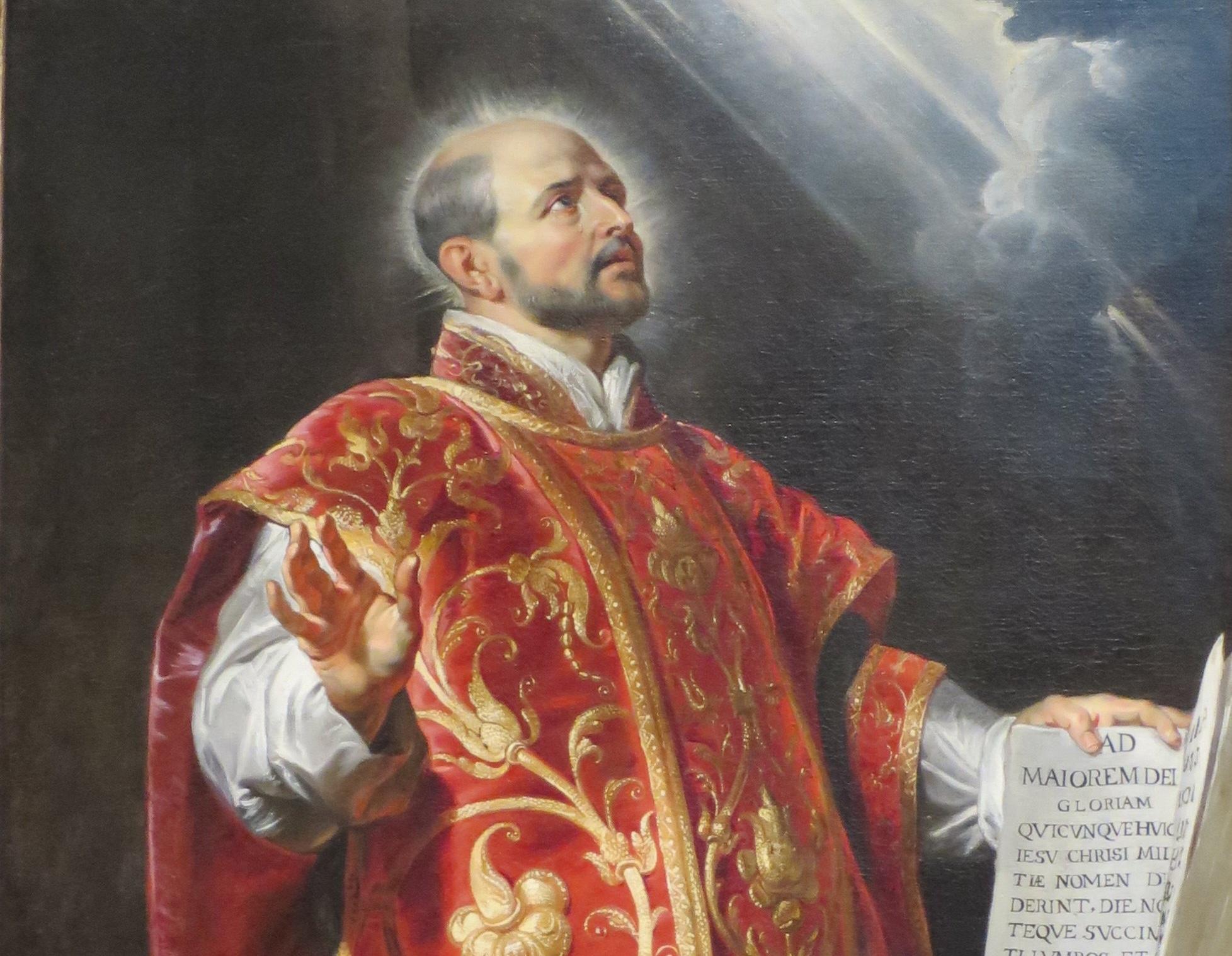
There, his doctors “decided that the leg should be broken again, that the bones, which had knit badly, might be properly reset […] He submitted to have his flesh cut again.”
This must have taken more than a little bravery, in the days before anaesthetics or antibiotics.
“During the operation, as in all he suffered before and after, he uttered no word and gave no sign of suffering save that of tightly clenching his fists.”
Life of San Ignacio – AKA St. Ignatius of Loyola
In his book The Basque History of the World, Mark Kurlansky suggests that Ignatius of Loyola is the most famous of all Basque people.
Born in 1491 as Íñigo, the youngest of thirteen children in a noble Basque family, he spent his youth seeking military fame – and also, gambling, duelling and pursuing young ladies.
But everything changed when he was hit by the cannonball that ricocheted off a wall in the Citadel of Pamplona.
Still recovering from his wounds – and his many surgeries – Ignatius’ mind returned to how he would someday court a noble lady, performing “warlike exploits” … “to please her”.
His plans, in the beginning, were for a life at court. (He even went through yet another painful surgery, to remove a protruding bone which he thought would make him look too deformed to be an attendant to the king.)
But without any novels available during his long recovery, he ended up with a book on the life of Christ, and another called Flower of the Saints. Reading and rereading, his mind began to turn toward spiritual thoughts.
Pilgrimage through Catalonia
Soon he was dreaming of a more austere life, in emulation of Saint Francis of Assisi or of Saint Dominic.
“When he thought of worldly things it gave him great pleasure, but afterward he found himself dry and sad. But when he thought of journeying to Jerusalem, and of living only on herbs, and practising austerities, he found pleasure not only while thinking of them, but also when he had ceased.”
When he was finally well enough, he began his pilgrimage to the Holy Land, buying a piece of sack-cloth to make himself a new penitential garment along the way.
“Filled with the liveliest abhorrence of his past sins”, he stopped in Montserrat, at the Benedictine monastery on the mountain.
There he hung up his sword before Our Lady of Montserrat, symbolically renouncing his former life.
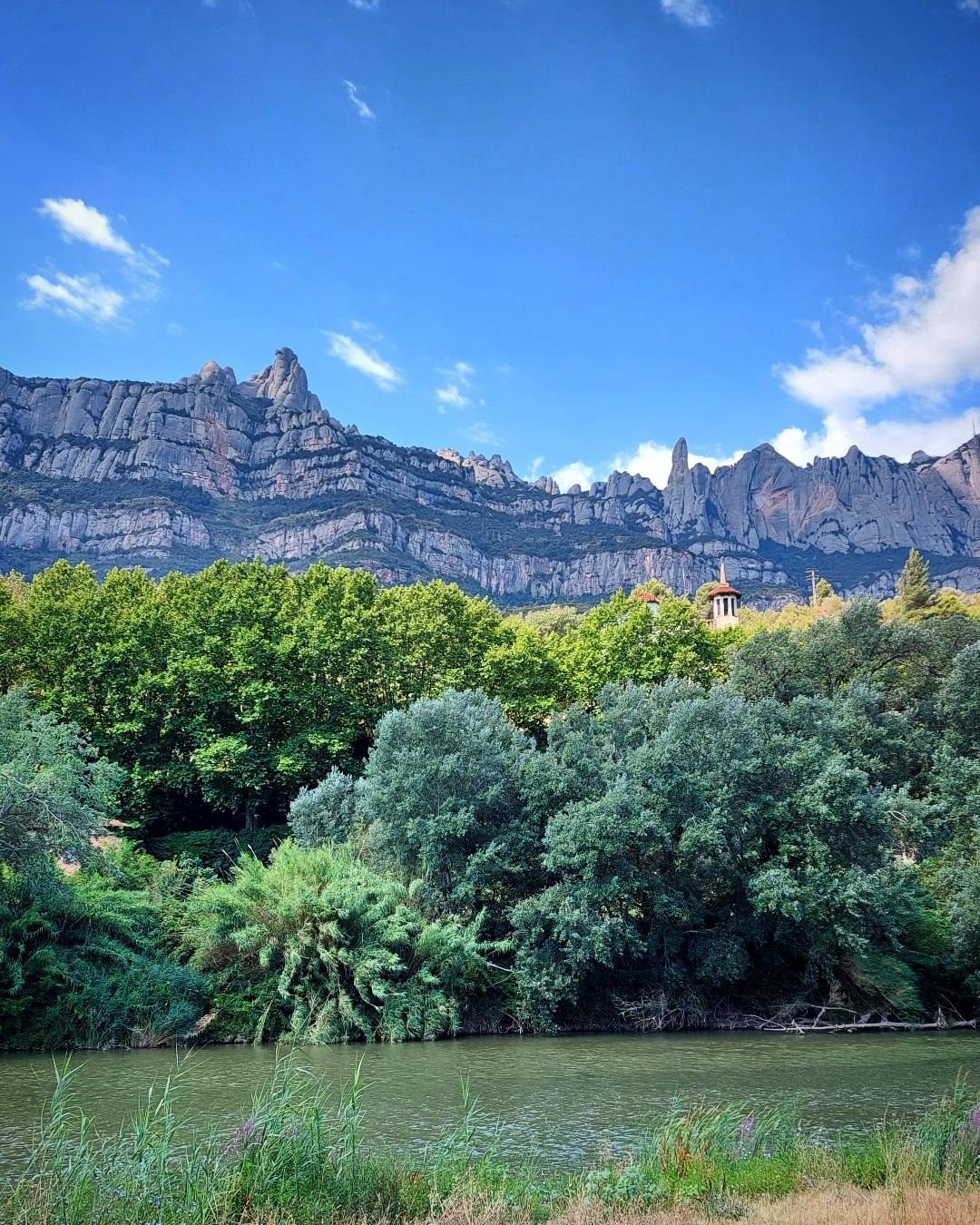
(Montserrat is a famous site for Catholic pilgrimage, now about an hour’s ride from Barcelona by train. The 12th-century statue of Our Lady there is replicated in many other Catalan churches. “La Moreneta”, as she’s known, is the patroness of Catalonia and an important symbol of Catalan identity.)
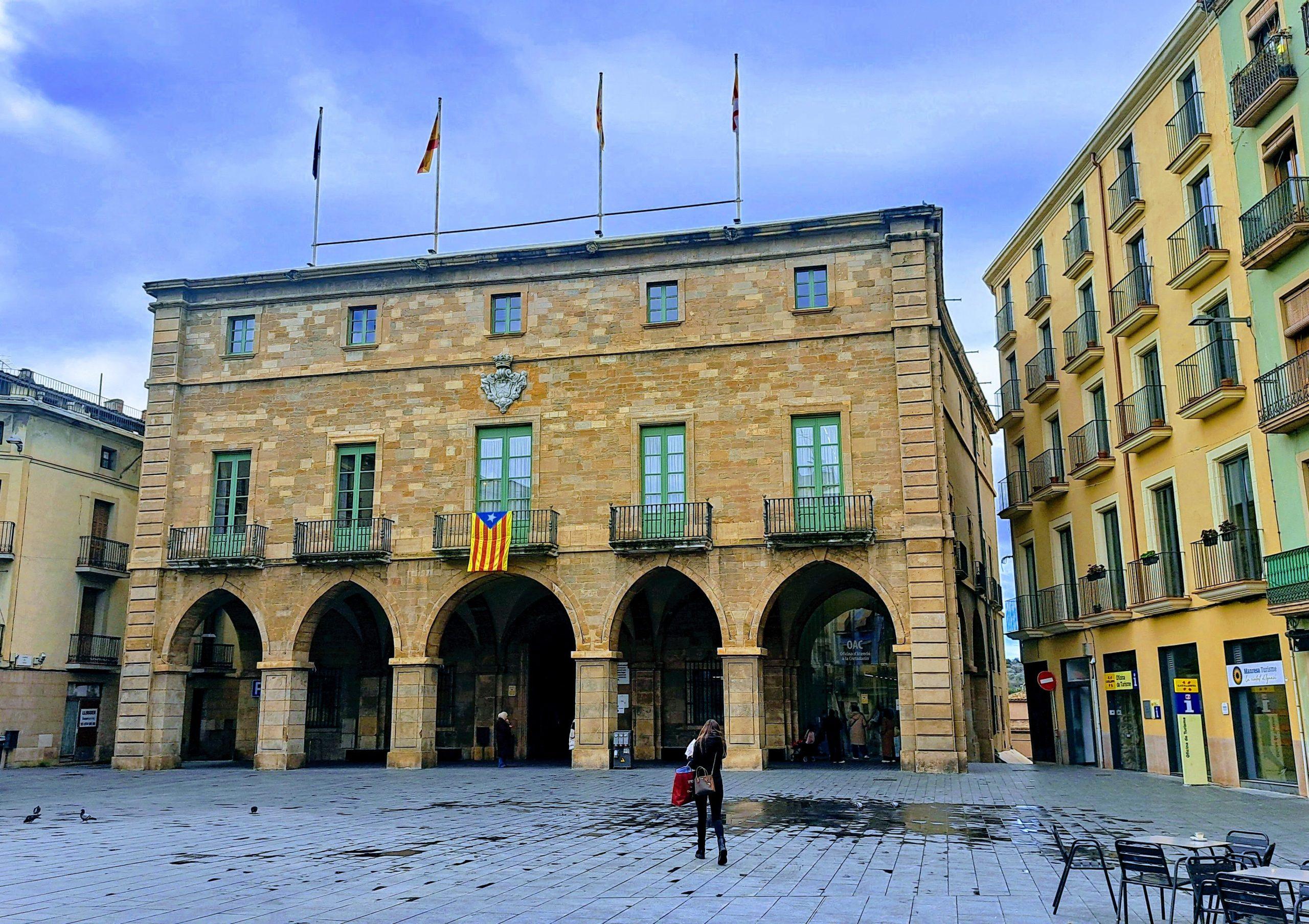
Later, he proceeded to Manresa, a town in central Catalonia, where he stayed for about 10 months – begging, praying in a cave, and writing part of his now-famous Spiritual Exercises.
Vanities of the World
Like Saint Ignatius, I’ve spent plenty of time enthralled by the vanities of the world.
But over the last several years, I’ve found myself losing interest in mundane things. And in most of the modern forms of self-indulgence, really.
Long story short, I’ve come to see that many of the “problems” that people claim to have in today’s world are not material, or political, but spiritual.
The epidemics of anxiety and depression are real. And they won’t magically go away with a new tax on billionaires, or a new party in government. Obviously.
On the other hand, spirituality might have a solution.
Most religions aim for self-transcendence: you and your desires are not the center of things.
Serving a higher power is more or less the opposite of vanity. And it’s also more or less the opposite of the average secular person’s worldview.
I didn’t used to think this way. But at my current age, it’s starting to look like religion had it right all along.
In any case, I’m sure of one thing. Having more money, or more stuff – more desire – in a rootless world that’s being stripped of its history and meaning isn’t going to solve most people’s problems.
In fact, if having more stuff were going to work, it would have already. I’ve been on this planet for some 43 years, and the amount of stuff has increased dramatically in that time. But the average level of happiness hasn’t.
Ignatius of Loyola’s travels and studies
In other words, I think modern people could learn a lot from guys like Íñigo.
Today you can walk the route from Loyola (in the Basque Country) to Manresa, which originally took him about a month. The Camino Ignaciano goes all the way to the cave where the young saint prayed.
He later got on the Camino Real to Barcelona, and from there he caught a boat to the Holy Land. (He changed his name from Íñigo to the more-international Ignatius when he started travelling around.)
Arriving in Jerusalem, he found that the Christian monasteries in the Holy Land were already full of aspiring penitents, and he was sent back to Europe after a few weeks.
His autobiography describes a visit to the Mount of Olives, where Christ ascended to Heaven.
Back in Spain at age 33, he decided “to enter upon a course of study in order to be better fitted to save souls.”
So he began his education, studying in a public grammar school in Barcelona, and then going on to the University of Alcalá to study theology and Latin. (The university in Alcalá de Henares was founded in 1499, and it’s worth a visit if you’re in the area. Alcalá is also famous as the birthplace of Miguel de Cervantes, author of Don Quixote.)
In Alcalá he took up with some Illuminati and was arrested by the Inquisition for preaching without the proper certifications. Actually, he was arrested several times, and finally ended up chained to a pillar in a Salamanca dungeon.
But, examining his writings, and questioning him on the Canon Law, “his examiners could not find the least flaw in his doctrine” and eventually, Ignatius was released.
Prohibited from “drawing any distinction between mortal and venial sin” by the judges, Ignatius decided to go to France to avoid further brushes with the Inquisitors.
France and Spain were still at war, but “notwithstanding the many acts of cruelty inflicted by the French upon the Spaniards, many of whom had been impaled, he persevered in his intention.”
Founding of the Jesuit Order
In France, Ignatius studied at the university and lived by begging.
He practiced austerity through fasting and other penances, and created no small scandal when he shared his Spiritual Exercises with some friends – the exercises inspired the formerly wealthy friends to give away their worldly possessions and live as beggars like Ignatius was doing.
In 1534, Ignatius and six friends took a solemn vow to dedicate their lives to “helping souls”. The result of that meeting was a religious order we now know as the Jesuits.
Francis Xavier, another Basque, whose name you might recognize, was one of the six friends. He later went off to India and Japan, and was canonized in 1622. I was surprised to find his remains in the Basilica of Bom Jesus in Goa, India when I visited several years ago.
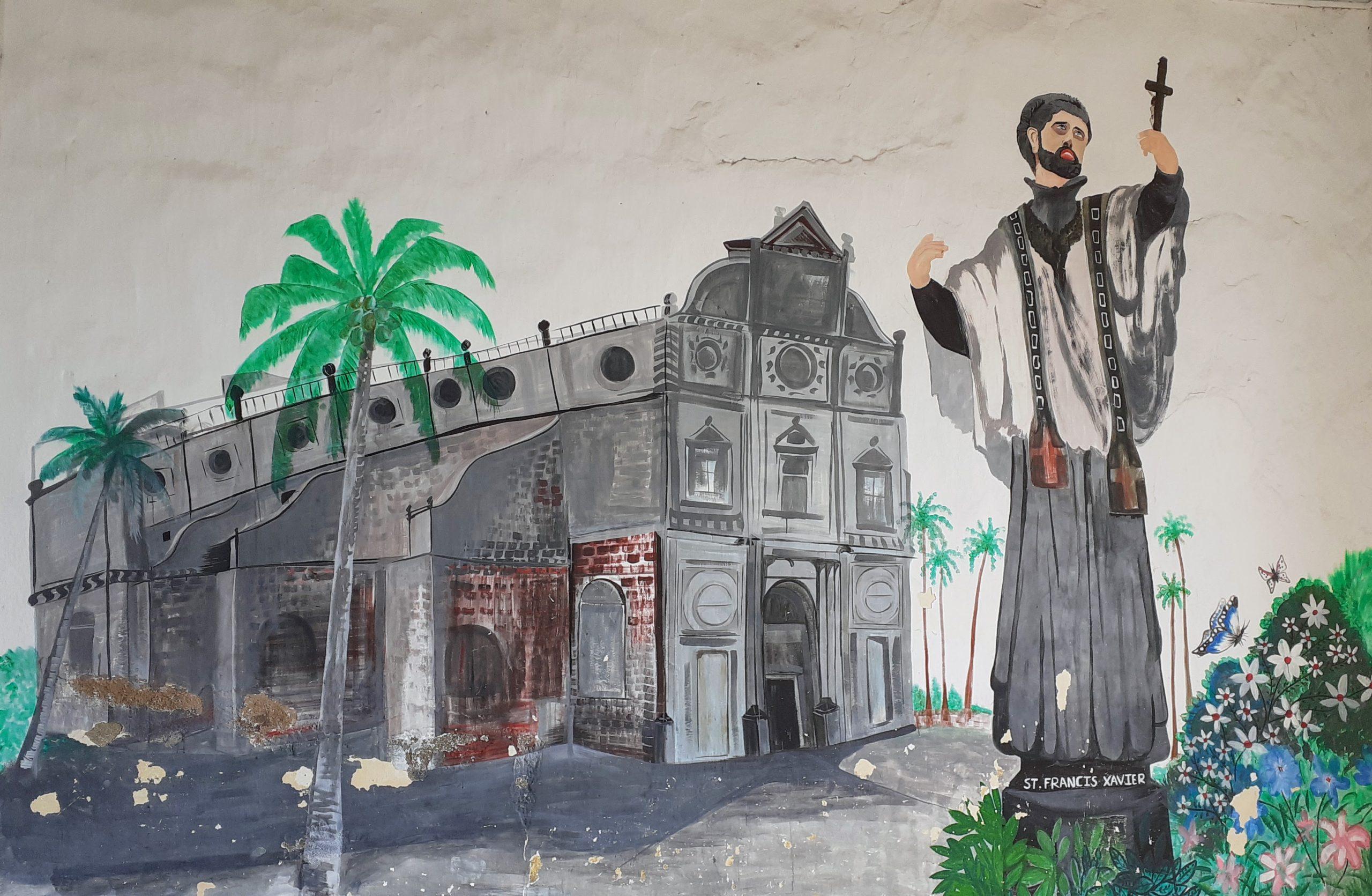
Then again, Christianity has been in India (allegedly) since Saint Thomas the Apostle started preaching there in 52 AD. There are plenty of Christians in South India, as I mentioned in my article about Kerala and Tamil Nadu.
In a letter to Xavier, Ignatius used the Latin phrase “Ite, inflammate omnia”, meaning, “Go, set the world on fire”. It’s an expression that’s still used today.
However, the Jesuits’ official motto is Ad Maiorem Dei Gloriam – “for the greater glory of God”.
Eventually, after many run-ins with the Inquisition, Ignatius’ activities got the official approval of Pope Paul III. And the rest, as they say, is history.
Ignatius died in 1556, at the age of 65, and was canonized in 1622, along with his old friend Xavier and two other notable Spaniards: Isidro of Madrid and Teresa de Ávila.
Spiritual Warfare vs Sinful Temptation
The Spiritual Exercises start off with an examining of one’s conscience.
It’s an interesting experience to go through. I recommend giving it a try.
Laying my life up to this point against the Ten Commandments, I don’t fare very well. And with the seven deadly sins it’s even worse. I’ve committed all of them, many times. Some more than others. Some continuously, for years.
Sitting a couple of weeks ago in a church named after Our Lady of Montserrat here in Barcelona, I realized that our materialist society doesn’t find anything wrong with greed, sloth, envy, wrath, gluttony, lust, and pride.
With the possible exception of sloth, these states are actively encouraged, for everyone, all the time.
In the words of British author Paul Kingsnorth, “The pursuit of these vices is no longer something to be confessed or repented: it is the very thing which drives our notion of progress forward.”
For greed and envy we can look at Instagram. For lust, basically anywhere. For wrath we have the whole clickbait media that profits from our anger. You see where I’m going with this.
According to most accounts, the worst of the seven sins is pride. Pride is what leads us to all the other vices – it’s what makes us think that for some reason, as modern enlightened people, we can safely ignore thousands of years of spiritual thought and wisdom, and just do whatever we want.
Are people still saying YOLO?
Here’s Paul Kingsnorth, again:
A value system which glorifies wealth and accumulation, which builds itself on a platform of want, which inflames and creates more of it daily … this is what every spiritual tradition in history has warned against, and with good reason.
– Against the Machine, p 98.
Today, our whole economy runs on creating desire.
But wanting more, and getting it, will never make you happy in the long term. You’ll just find new desires, feel unsatisfied with what you now have, and continue striving for more.
It’s called the hedonic treadmill, and I’ve written about it before.
On the other hand, letting go of vanity and wanting less seems to be a more reliable way to life satisfaction. But it’s a difficult and unpopular path, and not good for the bottom lines at the companies who need our money to survive.
Our “unique” modern uncertainties
As I said earlier, I think most of the depression, anxiety, and addiction that people face in the 21st century are spiritual problems masquerading as something else.
But I can hear the objections.
Maybe you think the mental health crisis has something to do with the unique uncertainties of the modern era. But I’m not sure our current uncertainties are unique. Back in Saint Ignatius’ day you could be disfigured by leprosy, or die of the plague, or be captured by pirates and sold into slavery.
They had their own version of the housing crisis, as well.
Ignatius lived, at one point, in a house with “neither door nor windows”, living only on bread and sleeping on straw. Try that as a spiritual exercise, if you want.
There was no golden age of full employment, affordable housing, and reasonable politics. No age without uncertainty. That’s just an illusion created by nostalgia. Read any history book for more detail.
(Miguel de Cervantes, incidentally, was captured by pirates and sold into slavery in 1575. I talk a bit about that in my article on the Route of Don Quixote. He was a slave for five years, and went on to do great things.)
Stoicism, Buddhism, and the good life
Anyway, here in my 40s, I’m learning a lot from people like Ignatius.
But if you don’t like the idea of God, you can get most of the same things from Stoicism. For example, in Letters from a Stoic, Seneca says…
“It is not the man who has too little, but the man who craves more, that is poor.”
He goes on to warn against coveting your neighbor’s property, just like the last of the Ten Commandments.
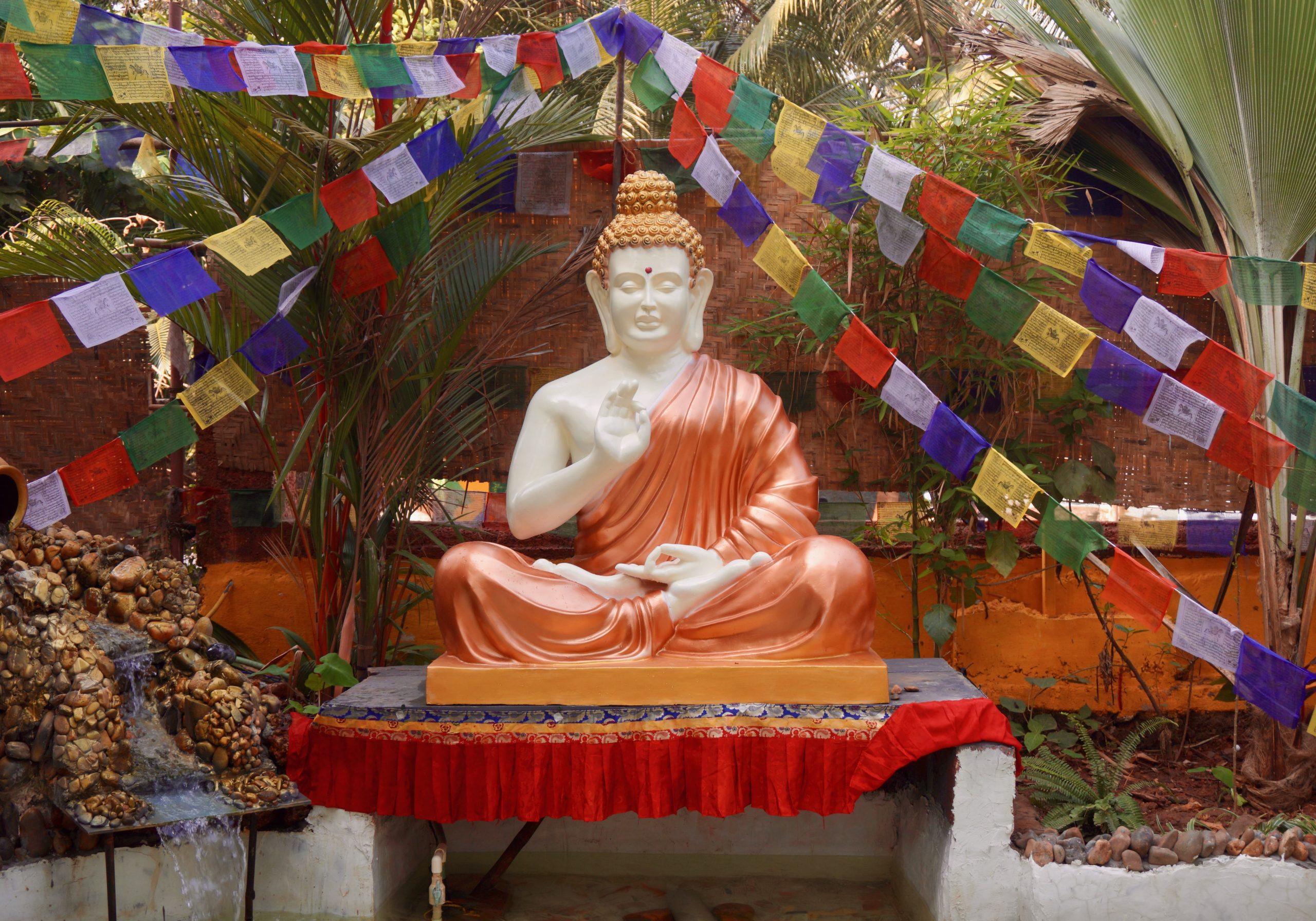
Or, if you don’t want to do Stoicism, I could point out that the Buddhist concept of hell is the Realm of Hungry Ghosts, in which tortured souls experience insatiable craving, addiction, and extreme selfishness.
Sounds a lot like a walk through my local shopping center.
Ironically, renouncing the vanities of the world gained Ignatius of Loyola a much “greater name” than soldiering ever would have.
There may be a lesson there, but I’m not sure what it is.
Ad Maiorem Dei Gloriam.
Yours,
Daniel AKA Mr Chroizo.
P.S. There’s quite a bit more backstory to my spirituality, but it really has nothing to do with Saint Ignatius. In fact, this article was inspired by a trip to the police station in Manresa for the final document regarding my Spanish nationality. On the long train ride up there, I did some research and found out about the cave, and the Spiritual Exercises, and the history.
P.P.S. On a completely unrelated note, I was recently looking into famous Spanish philosophers, and found that the most famous of them all is Seneca. Guess I can’t argue with that. He was from Córdoba, in Roman Hispania. There’s a big statue of him in that city, next to the Puerta de Almodóvar. And Letters from a Stoic is pretty good philosophy, if you’re into that sort of thing. Also, if you’d like to know about some more modern Spaniards who are doing big things, check out my article on Famous Spanish People. Enjoy!

0 comments