

Everyone called him Paquito.
He was the third child of five, born in 1892.
His father was a bohemian – a drinker and a gambler.
Growing up in Ferrol, a naval town in Galicia, in the rainy North of Spain, little Paquito Franco rebelled against his father through Catholic piety, clinging to his mother.
His family was lower-middle class, involved in the administration at the Naval Base. Paquito’s father Nicolás always hoped his sons would grow up to be proper naval officers.
An authoritarian who beat his sons “no more than was the norm at the time”, Nicolás Franco eventually moved to Madrid and took a second wife, and later, when asked about his son by reporters, would talk about the exploits of one of the other brothers.
Only when pressed would he comment on the career of Paquito, “his other son”, now known to the world as Francisco Franco, el Caudillo de España.
From humble beginnings, then, came the future dictator.
Who was Francisco Franco?
Paul Preston, in his mammoth biography of Francisco Franco, suggests that behind the dictator who compared himself to El Cid – another conquering hero and liberator of Spain – was a timid, quiet man who suffered from a painful sense of inadequacy.
Who was Franco, really?
He’s certainly less-known than other European dictators of the 20th century, even though his government lasted much longer. Franco ruled Spain until his death in 1975, but he’s still a mysterious figure.
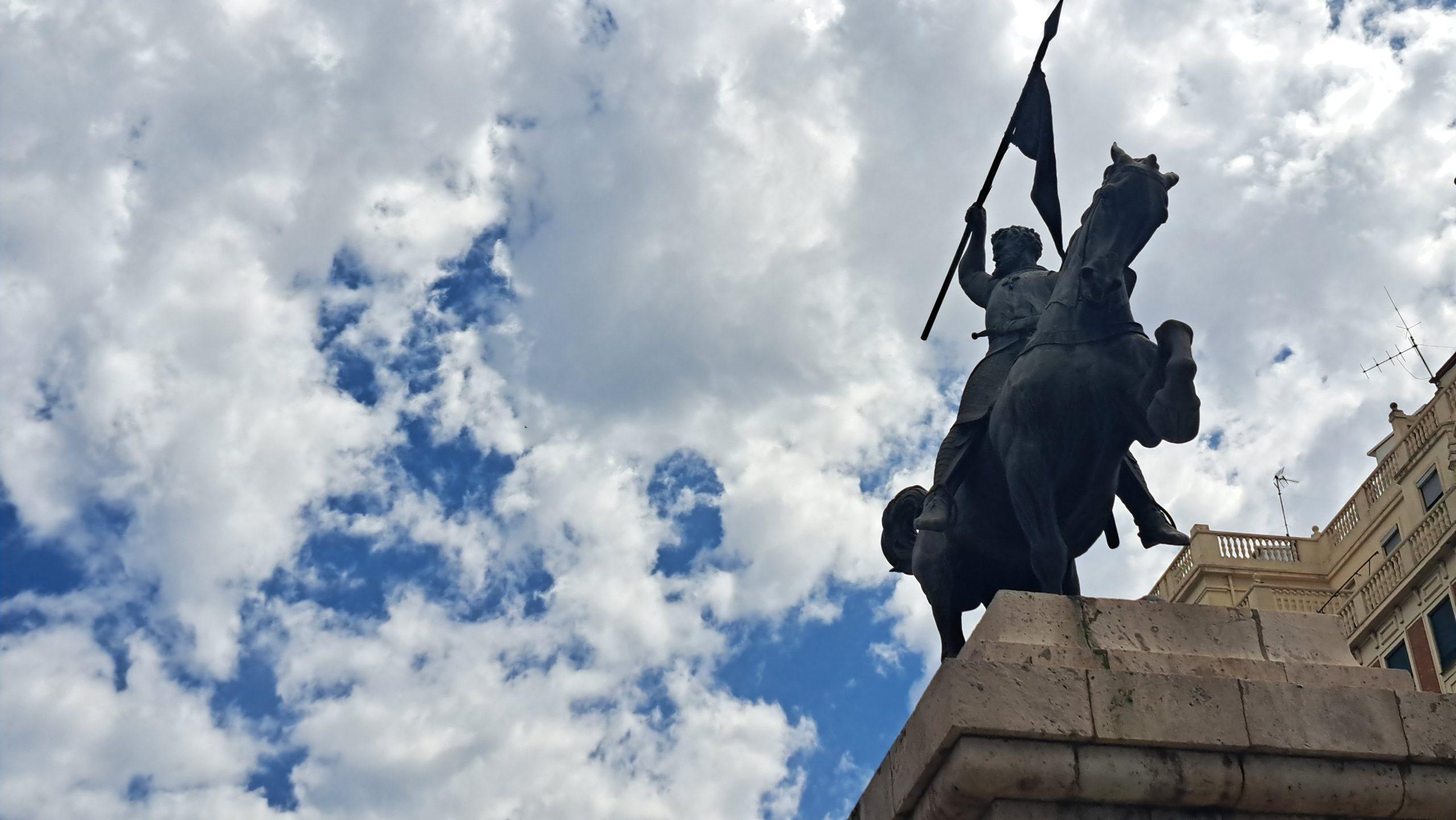
Every British author (and there are many) who writes about Spain eventually gets around to talking about people from Galicia, and mentions the idea of retranca gallega – an ambiguity of intention. “If you meet a gallego on a staircase” the joke says, “you’ll never know if he’s going up or down.” And that describes Franco pretty well.
“A less straightforward man I never met”, said John Whitaker, an American journalist who tried to interview Franco during the Civil War.
Paquito’s older cousin (and confidant) Pacón once said that in 70 years, he never saw Franco “open to fruitful dialogue or to creative self-doubt”.
Salvador Dalí, the surrealist, thought Franco was “a saint, a mystic, an extraordinary being”.
But with a high-pitched voice and effeminate manner, Franco wasn’t your typical dictator. He was, and is, in fact, something of an enigma, even here in Spain.
Spain’s Generation of 1898
Paquito was five and a half years old when the Spanish American War took place.
In Spain they tend to call it “La Guerra de Cuba” – it’s the conflict in which Spain lost its last overseas colonies. It ended the period of Empire, in other words, which had begun with Columbus in 1492.
Historians always portray this moment as a national trauma.
In the first part of the 20th century there was a literary movement called “la Generación del 98” which tried to re-think Spain’s place in the world as a post-imperial nation.
But where Franco was, in a town full of military men, things weren’t so poetic.
Men who had been mutilated in the war could frequently be seen around Ferrol. There were cutbacks across the board, now that the Spanish Navy didn’t have an empire to defend.
Franco went to military prep school from age 12, and was in the Infantry school housed in the Alcázar de Toledo by 15. His path into the Navy blocked due to budget cuts, he still became obsessed with Spanish imperial greatness.
At five foot four, and so thin that his fellow students compared him to a matchstick – in Spanish, cerrillito – he threw himself into military life and developed a fetish for “heroism, bravery and the military virtues” that would serve him well in the coming decades.
In the military academy at Toledo, Paquito became Franquito – a disciplined young man, thoroughly indoctrinated (along with his classmates) to believe that the Army had a moral responsibility to “guard the essence of the nation”.
No insult to the monarchy, the flag, or to Spain was to be tolerated.
Founding the Spanish Legion
Franco was promoted rapidly, first becoming the youngest major in the Spanish military, at age 24. He would eventually be the youngest general in Europe.
He received a commission to Morocco, where Spain was involved in its final colonial adventure – a losing war against tribespeople in the mountains around the Spanish enclaves of Ceuta and Melilla.
There he was shot in the stomach, and not expected to survive. When he did, it was considered a spiritual event: the locals thought that Franco was blessed and protected by God.
In 1920, Franco (under the famous one-armed, one-eyed general Millán-Astray) helped to found the Spanish Legion, a hard-core group of fighters who carried on the war in Morocco under the slogan “Long live death” – ¡Viva la muerte!
Millán-Astray saw himself as a crusader, carrying on the Reconquista against the Moors, and reviving Spain’s Christian and Imperial traditions. These ideas rubbed off on Franco, who carried them into his crusade against communism and liberalism later on.

In Morocco, Franco learned how to terrorize and oppress local populations, and his distaste for the left back home was confirmed by their opposition to the African adventure.
Franco also rejected the ideas of the left as being associated with his dissolute father.
He resisted the “pleasures of the flesh”, and became a fervent anti-communist, subscribing to a magazine dedicated to exposing the communist menace around Europe.
Many Spanish revolutions
Spain was not a land of peace and stable government in the years leading up to the Second Republic. In fact, there were more revolutions and coups than I care to list here. For example:
- General O’Donnell’s coup in 1854.
- The Glorious Revolution of 1868, which sent Isabel II into exile.
- A two-year monarchy (1871 to 1873) under someone named Amadeo I, from the Italian Savoy royal house, who I’m hearing of for the first time this morning.
- The First Spanish Republic, which lasted from February 1873 to December 1874 – about 22 months.
- The 1874 coup (pronunciamiento) that ended the First Republic, restoring the Bourbon Monarchy under Alfonso XII.
- The assassination of Prime Minister Eduardo Dato by Catalan anarchists in 1921.
- The coup in 1923 that brought Miguel Primo de Rivera in to head a military dictatorship, but without dethroning King Alfonso XIII.
- Etc.
What I’m saying is that the military uprising in 1936 – the one that led to Franco’s dictatorship – wasn’t some sort of unprecedented thing. Instead, it was just part of how Spanish politics worked at the time: things would get out of hand every so often, and a military strongman would come in to re-establish order.
Was Spain really centuries behind the rest of Europe?
You can’t explain Franco, or the Civil War, without first going into a lot of the context of what was going on in Spain in the early 20th century.
People like to say that Spain was a medieval theocracy, centuries behind the rest of Europe.
But I don’t know. The rest of Europe went through a huge transition during World War I, when the old aristocratic social order collapsed.
Spain stayed out of World War I, and the monarchy (plus the system of conservative aristocrat landowners) was still in place moving into the 1920s.
While empires around Europe (Austro-Hungarian, Ottoman, Russian) had collapsed, Spain was the same country in 1924 as it was in 1914, but perhaps not “centuries behind”.
The Second Republic began in 1931, when king Alfonso XIII was deposed and fled the country. The new leftist government attempted some reforms, building schools and trying to limit the influence of the Catholic Church.
Up north, the Catalans declared an independent Catalan Republic, which lasted for three days until they were brought back to Spanishness under the Generalitat de Catalunya.
Spain’s Second Republic
The Republic was a very chaotic time, and Franco initially supported the new regime.
He was a soldier, and tried to defend the legally-elected Spanish government, whether or not he agreed with it. But there was a certain friction between many of the generals and the new leftist order.
In 1933, new elections threw the socialist party – the same PSOE we have today – out of the government, and they decided that the parliamentary system had failed. They needed to start a revolution.
Francisco Largo Caballero, also known as “the Spanish Lenin” helped whip the workers up into revolutionary fury. Meanwhile, the CNT – an anarchist labor union, also still in existence – staged an uprising in December, which lasted 7 days. Around 100 people were killed in the attempt to create a workers’ utopia.
The next year, the Catalans declared independence again. (They tend to do that with some frequency.) And Franco was brought in by the government put down a revolutionary strike in the mines of Asturias.
This he did in the most heavy-handed way possible, sending Moroccan mercenaries to shoot people, and bombing working-class neighborhoods in the mining towns.
Around 2000 people died in the Asturian Revolution – mostly workers.
Historians are still debating whether this should be considered the first battle of the Spanish Civil War. Either way, it doesn’t sound much like peacetime.
Ironically for a guy whose worldview made such a big deal about the Reconquista and expelling the Moors from Spain, Franco was more than happy to use Moroccan mercenaries to commit atrocities against Spanish people.
The plot to overthrow the Second Republic
One of the big problems that made the Spanish Civil War seem inevitable is that the two sides didn’t really see the others as human. On the right, they thought that working class leftists should be gotten rid of. On the left, they thought the same thing about the bourgeoisie.
There was violence in the streets, and politics by assassination. Anarchists would burn churches and kill priests and nuns during the Republic. To law-and-order types like Franco, things seemed to be getting out of hand.
But Franco, in classic Gallego style, tended to be ambiguous in his intentions when other generals started to talk about an uprising.
He stayed out of a failed coup attempt in 1932, organized by General José Sanjurjo.
Sanjurjo was sentenced to death, but the sentence was reduced to life in prison, and (in 1934) he was given amnesty. Two years later he organized the coup we all know about – the one that overturned the Second Republic.
There were also multiple anarchist uprisings, and the Revolutionary General Strike carried out by the PSOE in 1934 – part of that was the Asturian miners’ strike I mentioned earlier.
So the left was also trying to overthrow the Republic, convinced that “bourgeois democracy” wasn’t going to work in the long term.
When people claim that the military coup in 1936 didn’t really start the Civil War, they can point to stuff like this: socialists like Largo Caballero, annoyed by having to go through democratic channels, were trying to start a workers’ revolution and establish the “dictatorship of the proletariat” years earlier.
Francisco Franco in the Canary Islands
Franco spent part of 1936 in the Canary Islands.
He was sent there by the Republican government so he’d be out of the way, and not cause trouble.
(The leftists had won another election in early 1936, and the new leaders of the Republic were fully aware that the military could rise up at any time, so they sent the right-wing generals to faraway places.)
In the Canaries, Franco studied English, and played a lot of golf.
Again, he was evasive about his intention to participate in the 1936 plot, organized by Generals Sanjuro and Mola.
It would appear that Franco didn’t mind defending the Republic, as long as the Republic was the winning side. Other right-wing generals, infuriated by Franco’s refusal to commit to the conspiracy, dubbed him “Miss Canary Islands 1936”.

He later (after the rebellion was successful) re-invented history to claim that he spent the whole time overseeing preparations for the coup, but in fact, in July 1936, Franco was planning a trip to Scotland to improve his golf game.
On July 12th, everything changed, when the prominent right-wing politician José Calvo Sotelo was killed by leftist members of the Assault Guards police force.
Some considered this to be the declaration of war they’d been waiting for. The socialists demanded the arming of the workers, in preparation for a military uprising. Franco went to English class the next day a changed man.
A few days later, he was on his famous chartered flight to Morocco, to take control of the Army of Africa and from there join the fight in mainland Spain.
The Spanish Civil War
I’ve written quite a bit about the Spanish Civil War in other places.
It’s a conflict that’s been romanticized by people in other countries, largely because of George Orwell’s book Homage to Catalonia and Ken Loach’s film Land and Freedom (which is roughly based on Orwell).
One of the common misconceptions about the Civil War is that people neatly divided into two sides: left and right, the reds and the fascists. In reality, each “side” had various factions fighting for supremacy.
Orwell describes participating in a battle in Barcelona in which his militia is shooting at guys from another leftist faction. Those were the May Days of 1937. The Stalinists eventually took over the leftist cause, putting people – other leftists – in gulags and trying to purge the Republican military of “Trotskyist” influence.
When Orwell flees Spain to save his skin, he’s not running from the fascists: he’s running from people who are theoretically on his own side.
On the right the same thing was happening: the war started with an uprising of military divisions, as well as groups of monarchists who wanted Alfonso XIII back, Carlists (who supported an alternative branch of the Bourbon family), and other right-wing elements.
In the common parlance, all of these were “fascists”, but in fact, Spain only had a small fascist party – the Falange, under José Antonio Primo de Rivera (son of the recent dictator Miguel Primo de Rivera, who had resigned and died in exile).
So a lot of the story of the Civil War is the story of Franco consolidating his power among the right.
Two other generals who participated in the uprising were killed in plane crashes. (Planes in the 1930s were a lot more dangerous than today.)
José Antonio was executed in prison in Alicante. Franco took over the Falange, and manouvered his way to the top of the right-wing heap.
So if you say “the fascists”, everyone today will understand you. But it’s only shorthand for the coalition of right-wing forces that eventually adopted fascist symbols and won the Civil War.
What were Franco’s politics?
All this to say, Franco wasn’t really a fascist.
At least, he wasn’t a member of any fascist party going into the war. He didn’t get along with José Antonio – Franco just took over the party under his own umbrella when it was convenient to do so.
I’ll quote historian Ian Kershaw here, who said that “trying to define ‘fascism’ is like trying to nail jelly to the wall”.
In any case, Franco was right-wing, authoritarian, and anti-communist. (And, starting with Stalin, the left likes to call anyone who is against them “fascists”, so there’s that.)
To me, Franco just seems to have been a guy who was into power. He liked winning, and figured out a way to stay on the winning side – for decades.
Long story short, the fascists didn’t win the Spanish Civil War: Franco did. And he established himself as leader of Spain by unifying the various factions on the right.

In July 1936 he told an American reporter he was ready to march on Madrid and “save Spain from Marxism at whatever cost”. When the reporter suggested that might mean shooting half of Spain, Franco smiled and said, “I repeat, at whatever cost.”
He’d learned about terrorizing his enemies as a Legionnaire in Morocco, and was now prepared to do the same with the Spanish civilian population.
Already named head of the nationalist uprising in September 1936, just a few months into the war, he held his position for four decades, and never stepped down.
(The deposed king Alfonso XIII would send Franco letters, apparently assuming that some day he’d be brought back to run the country. Franco blew him off, and the monarchy was only re-instated with Juan Carlos I – Alfonso’s grandson –in 1975.)
I’ve heard Franco called “apolitical”. But he liked the idea of a strong military and Catholic church to organize society. And that’s what Spain got – along with a cult of personality to El Caudillo.
Franco rises to the top of the right
On the fourth day of the Civil War, General Sanjurjo – the leader of the uprising – was killed.
Exiled in Portugal, he was attempting a dramatic re-entry to Spain with his dress uniforms – the ones he’d be needing for all the galas he’d be attending when he became Caudillo.
The tiny plane, weighed down by all the fancy clothes, barely made it off the runway before crashing. Adiós, Sanjurjo.
Elsewhere, the uprising moved quickly. Within a few days, the front lines were drawn.

(There’s a ton of detail about all this, if you’re into it. As well as Preston’s biography of Franco, you could pick up Anthony Beevor’s The Battle for Spain and/or Hugh Thomas’ The Spanish Civil War.)
In those early days of the war in 1936, it seemed like things would be over quickly.
Franco wasn’t anyone’s first choice for leader of the rebellion. But his military exploits meant he was famous abroad, and he didn’t have a lot of political enemies.
(He was also the brother of Ramón Franco, who became famous for flying a sea-plane across the Atlantic a year before Charles Lindbergh… so maybe that helped his international reputation.)
From the beginning, he was networking with Hitler and Mussolini, meaning that he was in charge of getting guns, planes and supplies for the uprising – which put him in a powerful position relative to the other generals.
By September, Franco was on his way to Madrid and he probably could have won the war right then. But winning the war wasn’t his only goal. With the murder of Calvo Sotelo, the execution of José Antonio, and the untimely death of Sanjurjo, Franco was a lot closer to the top than he had been at the beginning of the uprising.
With that in mind, he went to rescue the right-wing soldiers under siege in the Alcázar de Toledo. It was a great propaganda victory – there’s a monument to this event outside the fort, even today.
Around that time, he was named head of the rebellion.
Later, he moved his headquarters to Salamanca, and then to Burgos, and started building a government. He would win the war, but slowly, crushing resistance town by town, and making sure that by the time the whole thing was over, there wouldn’t be an organized left to stand up to him.
Franco’s War of Annihilation
The Civil War dragged on for three years – largely, because Franco didn’t want a speedy victory. Instead, he wanted to consolidate his power and to crush the left slowly.
His brother-in-law Ramón Serrano Suñer – coincidentally, one of the great legal minds of his generation – set about creating a new state apparatus with Franco at its center. And Franco went about winning the war.
He travelled with the incorrupt arm of Santa Teresa – preserved since that saint’s death in 1582 – which was given to him after his troops took Málaga.
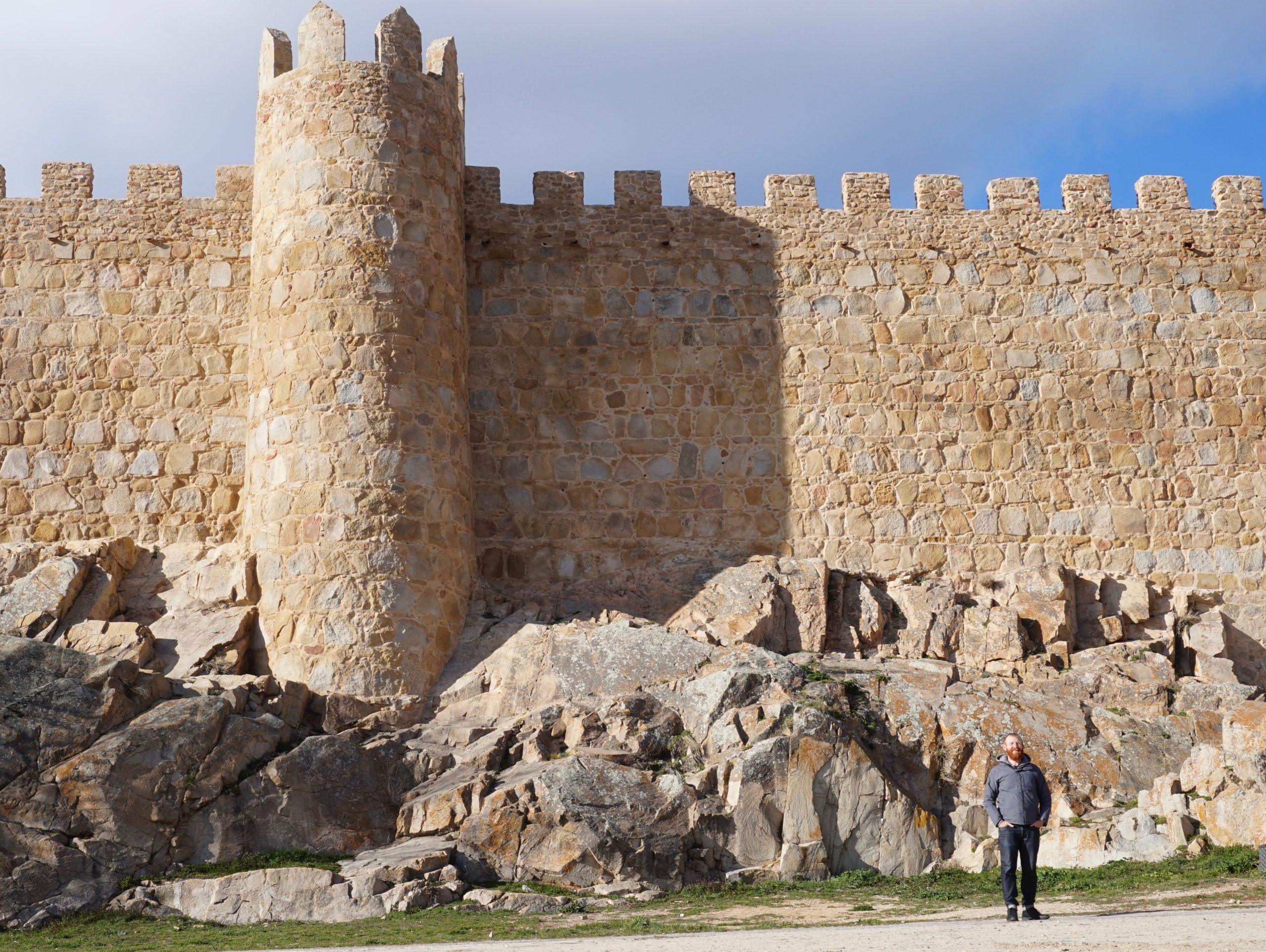
Meanwhile, Madrid was under siege, and out in the provinces, there was plenty of cruelty and nastiness. Franco (a soldier, not an economist) came down especially hard on the Basques, who controlled a large part of Spain’s industry. The bombing of Guernica is a famous example.
Later, Basque terrorism would become one of the defining features of Spanish politics. It’s interesting to contemplate that the conservative Catholic Basques might have joined Franco’s cause, if he had accepted their surrender with generosity.
Instead, wanted to crush the Basque nationalists, and had hundreds of prisoners lined up and shot. This horrified even the Italian fascists present, and guaranteed that several generations of Basques would be sworn enemies of Spanish nationalism.
The Republic’s losing battle for Spain
On the Republican side, the Civil War didn’t go well.
In the early days of the conflict, the Republican government sent their gold reserves up to Moscow for safe keeping. Stalin would, in theory, provide them with arms and support, taking in exchange a reasonable amount from the gold reserves. But in the event, already having the gold, Stalin was tepid in his support.
Why Stalin didn’t send more to help the Republic is debatable. But it looks like the Soviets, having achieved control over Russia almost two decades earlier, were no longer interested in supporting workers’ revolutions.
Meanwhile, most of the professional military in Spain was on Franco’s side. The generals who’d stayed loyal to the Republic led the People’s Army to a grand total of zero – that’s 0 – major victories.
(They won several minor victories, and the Battles of Jarama and Guadalajara, for example, served to slow Franco’s progress. What they didn’t do was capture much new territory for the Republic.)
Other than that, there was no clear leadership on the Republican side. The various parties spent a lot of the time fighting among themselves (see Orwell). And at the end, most of the political class was able to leave the country – many went on to enjoy long lives in exile abroad.
It’s worth mentioning again that the various factions on the left also spent the war imprisoning people for having the wrong ideas, and at times shooting prisoners. The Paracuellos massacres are the most famous example: soldiers, civilians, and Catholic priests were let out of prisons in Madrid, only to be lined up and shot in fields outside town.
Who exactly was responsible for this is still controversial, and the number of dead ranges from 1000 to 12,000, depending on who’s counting.
Franco’s legend grows… and grows
Franco was named head of the rebel generals – the generalissimo – in the first months of the war.
Eventually, he was also declared head of state, and President of the Government. Caudillo de España by popular acclaim, Franco considered himself to be a national savior, similar to a Hitler or a Mussolini.
In Salamanca, he set himself up in the Episcopal Palace, with his African guards standing around in colorful uniforms (complete with turbans) – he seemed more like a king than a military leader.
At the same time, his picture started appearing everywhere. A propaganda apparatus sprang up, building the myth of Franco, the all-seeing political and military genius. And Franco was someone who was fully capable of believing his own propaganda – the whole thing inflated his ego to an incredible size.
On the other hand, he appointed his old friend Millán-Astray (the one-armed, one-eyed general from the Legion, remember) as head of propaganda, and Millán-Astray bungled the job spectacularly.
While the Spanish left, during the Civil War, had Hemingway, Orwell and others writing sympathetically about their cause, the other side had orders to threaten foreign correspondents with execution. This didn’t arouse great sympathy in the international press.
So while the right won the war on the ground in Spain, they lost the propaganda war, and Spain’s image suffered as a result.
Within Spain, though, Franco created a cult of personality that lasted decades.
And he certainly committed many atrocities on his way to the top. His goal of winning the war slowly – crushing all resistance as he went along – ensured a bloody time for Spain. And he continued pursuing his political enemies after the war was won. (More about that in a future part II of this article.)
Spanish people have told me that a lot of Spain’s social class system, even today, depends on whose side your family was on during the Civil War.
Many towns in Spain still have mass graves – and although most of that generation is gone now, the children and grandchildren of people who went through the war are (in a way) still dealing with the fallout.
The siege of Madrid and end of the war
We’re skipping around in time here, and for that I apologize. But there’s a lot to cover.
Back to Madrid. On 6 November 1936 – in the early days of the war – the Republican government (or what was left of it) moved from Madrid to Valencia.
Everyone assumed that the war would be over within days. Franco announced on 7 November that he would go to mass in Madrid the following day. But the militias in the city organized a fierce resistance, and fought off the Army of Africa along the Río Manzanares and in the area of Ciudad Universitaria.
Pablo Neruda was Chilean consul in Madrid at the time, and his autobiography has some interesting descriptions of the city under siege. Last I checked, you can still see some Civil War bunkers in Parque del Oeste, as well.
By the 22nd of November, the people of Madrid had repulsed the attacking armies, and a lot of people on Franco’s side thought the uprising was over. Soon, though, they were reinforced by soldiers from Mussolini’s Italy, and the war dragged on. The siege of Madrid lasted for two and a half years.
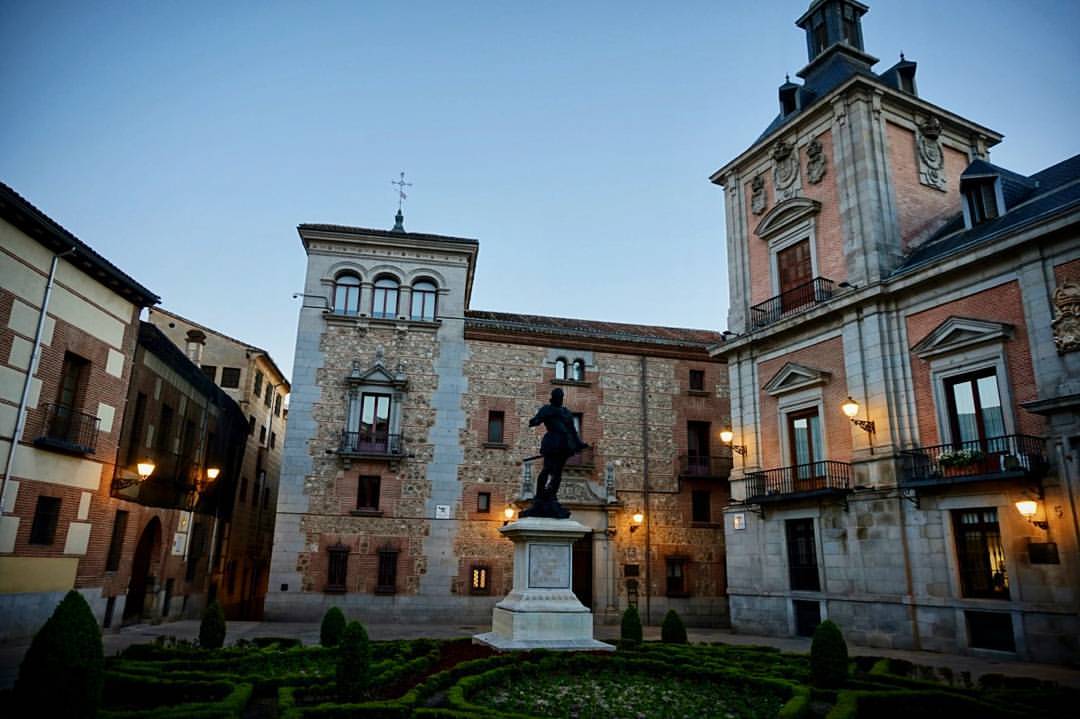
Madrileños of a certain political persuasion are still proud of this. At syndicalist protests you can often hear people shouting the antifascist slogan “No pasarán”, which comes from the siege.
In early 1939, Franco’s troops broke the front in Aragón and marched though Catalonia to the sea. A couple of months later, Madrid surrendered. The last remnants of the Republican government had tried to negotiate a peace deal to end things without further loss of life, but Franco would only accept unconditional surrender.
He would continue executing and imprisoning “the reds” for several years after the end of the war.
Paul Preston (author of the Franco biography I’m using for source material here) also has a book called The Spanish Holocaust which goes into detail about the horrors of the years between 1939 and 1945.
Of course, the rest of Europe – and the world – had its own problems at that point, and nobody paid much attention to sleepy old Spain, which Franco kept out of World War II.
The Legacy of Franco’s War
It’s been said that the Spanish Civil War would have been much shorter and less bloody if other countries had just stayed out of it. As things were at the beginning, there weren’t enough bullets or guns for a long conflict. So the support of the Italian and German fascists was decisive.
The left had Stalin’s less-than-enthusiastic support, which ended up being something of a problem. France, the UK, and the US all stayed out of the fighting.
Franco’s idea of victory “meant the annihilation of large numbers of Republicans and the total humiliation and terrorization of the surviving population”. So Spain, going into the 1940s, was in a dark place. But so was Europe. And by the time the dust settled on World War II, it must have seemed easier to just leave Franco alone.

Once in power, Franco showed no interest in stepping down. He installed himself as a sort of uncrowned monarch, and hung on until his death in 1975. The Spanish left never rose up in large enough numbers to topple the dictatorship, and the US never thought it was worth it to intervene.
Franco became the last dictator in Western Europe, and in many ways, he’s the architect of modern Spain.
There’s plenty more to cover in the life of Francisco Franco. I haven’t gotten through the second half of Preston’s book yet, so look out for a part II of this article.
Sign up for email updates here.
The Question of Historical Memory
When I started my research for this piece, I wasn’t sure if Franco was going to end up looking better or worse than I imagined. I had never really studied the guy, and all I knew was what I had heard from older Spaniards.
In the end, he’s a bit worse than I assumed – at least through the end of the Civil War.
On the other hand, I get the impression that if Franco were a European king from a previous century, or an Asian despot, nobody would blink at his human right record. He was, after all, just one in a long line of Spanish dictators and absolute rulers – and it’s not like Spain invented totalitarian states.
But his policy of “crushing his enemies” made him hugely unpopular among half the country, at least. In the years since his death, almost every monument to Franco has been removed.
There’s no national Civil War museum. And from what I’ve heard, schools don’t talk much about the war, or the many years of the dictatorship, so the younger generations are less informed than perhaps they should be.
When I was living in Madrid, almost a decade ago now, the “historical memory” debate was largely about changing the names of streets and plazas. Some of Franco’s collaborators (other military men) were still being commemorated, all those years later. So in my Tetuán neighborhood up north, Calle de General Yagüe became San Germán, and Capitán Haya became Poeta Joan Maragall.
Few remember, of course, that until the early 80s, Gran Vía in Madrid was Avenida de José Antonio (after the founder of Spanish fascism), and La Castellana was Avenida del Generalísimo.
Here in Barcelona, Avinguda Diagonal was, officially, Avenida del Generalísimo Francisco Franco until 1979.
So it goes. Times changed, and they’re still changing.
The 50th Anniversary of Franco’s death
A few weeks ago, I was in a Chinese bar after yet another visit to the local tax office, having some coffee and staying out of the rain.
It was 20 November – the 50th anniversary of Franco’s death, and the TV in the corner was playing a report on how far Spain had come since 1975. They had the talking heads commenting on black and white news-reels of Franco speaking on balconies, Franco next to Juan Carlos I, Franco’s state funeral.
Nobody in the bar was watching this, and nobody I know personally commented on the anniversary at all.
The big story that evening (and even into the next morning) was about a protest in Madrid. Some of Franco’s supporters had organized a mass for El Caudillo, which was interrupted by two women from a radical feminist group in one of those “topless church protests” that are supposed to break all the taboos.
In the event, some guy selling Francoist flags and other merchandise grabbed one of the girls’ boobs in front of a reporter’s camera. And that became the story. Taboos were broken. And life goes on.
Within a few hours, the press was back to talking about political corruption, as if nothing had happened.
Yours,
Daniel AKA Mr Chorizo.
P.S. I’ve spent the last 21 years living between Madrid and Barcelona. If you’d like to read more about that, check out the article My Immigrant Life. I think it’s pretty good. Also, I’ve got the best podcast about life in Spain – it’s called Spain to Go and it’s on Spotify and Apple Podcasts, among other places. Hit me up on Instagram, or leave me a comment right here… Thanks!

Thanks for this extensive article Daniel. I think it is a bit rambling but with several interesting parts and it takes courage to write about such a complex and controversial figure and times.
My opinion is that there are two clear parts in Franco's times: the first is very bad with the awfulness of a civil war, the heavy repression afterwards and the isolation and poverty of Spain in the 40's and 50's
The second, in the 60's and 70's is much better though, as Spain was gradually admitted back in the international community and economy, and investments and tourism came in. Spain also profited from the advantages of a Singaporean-style dictatorship: no public money needed for short-term political gains, instead it was spent in infrastructure. The country was partially reforested (even if with the easiest trees), a lot of dams were built (when the huge reservoirs near Madrid were completed in the 70's, the city had about 2 million, now -50 years later and not a single dam more- 6 million and still no water shortages) and Spain was even one of the leading nuclear power countries in Europe (alas no nuclear stations built anymore from 1980 but at least we have not had the lunacy of Germany closing them all)
My brother still keeps a 500 pesetas coin with Franco's effigy. When paying cash he lets it fall 'by accident' on the collector's hand, whose face reveals immediately how he/she sees the times of the dictatorship and by implication the current political situation in Spain.
Hey Raul, thanks for reading! Franco is definitely a delicate topic, but like you say, I get the impression that things get a lot better in the later years of the dictatorship. I’ll write about all of that eventually. The stories most people have told me about the Franco years, incidentally, are from the later years, because I didn’t know anyone old enough to be around for much of the 30s or 40s.