

If you’re looking to buy luxury real estate in Madrid, this is a guide for you.
Over the past several years, Madrid has quietly become one of the most interesting “big city” options in Europe.
Prime areas have had strong years, international demand is solid, and yet the city still feels more liveable (and often better value per square meter) than London or Paris.
If you’re thinking about buying a luxury flat here, you’re probably not just chasing an investment – you’re picturing a real base in Europe.

Before we go on, allow me to introduce myself: a buyer-only real estate advisor and founder of Stellium Estates, helping international clients buy higher-end homes in Madrid and selected areas in Spain.
In this article you’ll learn what we mean by “luxury” in Madrid, how much money to put aside for your new flat (plus taxes and fees), what to do about the residence permit, and how the home-buying process works here in Spain.
Let’s go…
What “luxury” actually means in Madrid
“Luxury” gets slapped on everything these days, so let’s make it concrete.
In Madrid, a genuinely high-end flat is usually a mix of:
- Where the flat is located – specific street, not just district
- The building it’s in – facade, entrance, elevator, neighbors, security
- The flat itself – layout, ceiling height, natural light, renovation quality
- Services available to homeowners – doorman, parking, storage, amenities
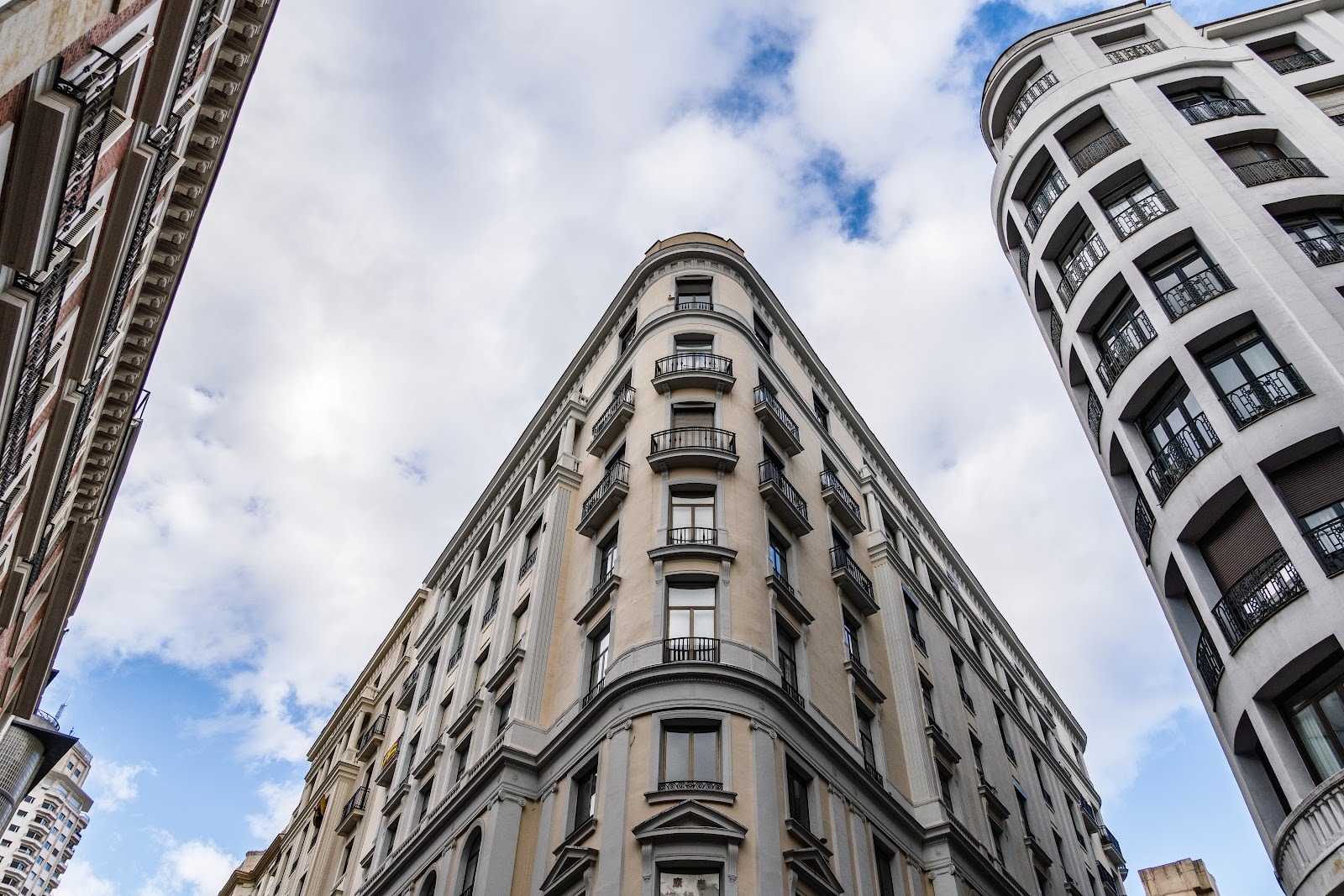
Most foreign buyers at this level end up circling the same central areas: Salamanca (the classic “golden mile”), Chamberí (elegant and residential) and Justicia / Salesas with parts of Cortes and Retiro (stylish, walkable, close to Retiro park).
Roughly, a good 120 m² flat in these Madrid neighborhoods often costs €1.4–2M, with penthouses or top new-builds above that.
For some higher-budget buyers, the real dream isn’t a flat at all but a villa with a garden and pool. In that case you’re more likely to look at areas like La Moraleja and other high-end residential zones on the edge of the city rather than the historic center.
This guide sticks to luxury apartments in central Madrid, but it’s worth being clear from the start which lifestyle you’re aiming for.
The key mindset shift is this: you’re not buying a “cheap apartment in Spain”, you’re buying a home in one of Europe’s in-demand capital-city neighborhoods.

Visas, residency, and home ownership in Spain
Spain’s “Golden Visa” via €500,000+ property purchase was closed to new applicants in 2025, so buying a flat no longer automatically gives you residency.
The sensible sequence for moving to Spain now is:
- Work with an immigration and tax professional to decide how you’ll live here legally (non-lucrative visa, remote-work / digital-nomad visa, etc.).
- In parallel, start looking for the right flat.
If you want to go deeper into the specific visa options and requirements, Daniel already has clear guides on this site, so I’ll keep it high-level here and focus on the property side.
Real-estate agents can share their experience, but they shouldn’t be the ones designing your visa or global tax plan.
Luxury flats in Madrid: how the buying process works
The Spanish buying process looks different from the US and some other EU countries, but once you know the steps it’s manageable:
- You (or your lawyer under power of attorney) first obtain an NIE (foreigner ID number) and usually open a Spanish bank account.
- You also decide whether you’re buying in cash or with a mortgage and check what a bank will lend.
- Once you’ve agreed on a price, it’s common to sign a short reservation with a small deposit so the property comes off the market while contracts are prepared.
- The serious commitment is the contrato de arras: you normally pay 10% of the price as a deposit, and both sides commit to the deal. If you walk away without a valid contractual reason, you can lose that deposit; if the seller backs out, they may have to return double. This is one of the moments where you really want your own lawyer reading every line.
- While you’re under arras, your lawyer runs due diligence: checking title, existing charges or debts, community-of-owners rules and fees, building issues and whether the flat fits the use you have in mind.
- Finally, you sign the public deed of sale (escritura de compraventa) at a notary, pay the remaining price and get the keys, and the deed is registered in the official Land Registry.
The whole process usually takes around two to three months, from the point when you make the first offer till the moment you officially own the flat. (Cash purchases can be a bit faster, whereas complex cases are a bit slower.)
Moving on to the next thing you should consider before buying a luxury flat in Madrid (or elsewhere in Spain)…
What a luxury flat really costs: price + roughly 10-13%
Many foreign buyers are surprised to discover they need to add around 10–13% on top of the purchase price in Madrid, depending on the property and how you structure things. That usually covers:
- Transfer tax (for most resales) or VAT plus stamp duty (for brand-new homes)
- Notary and Land Registry fees
- Your lawyer’s fees
- Bank / mortgage costs if you’re financing
So if you buy a flat at €1.5M, it’s normal for the total cost (price + taxes + fees) to end up somewhere around €1.65–1.7M. The important thing is to know this in advance so you’re comparing flats based on a realistic “all-in” budget, not just the asking price on Idealista.
About that “transfer tax” – the impuesto de transmisiones patrimoniales (ITP) will probably be your biggest expense. It varies from about 6% to 13% depending on what Comunidad Autónoma you’re in. In the Comunidad de Madrid it’s currently at 6% but in other places, like Catalonia, it’s 11% on flats over 1,000,000€.
Check this article for more about the ITP in different Spanish regions and avoid surprises.
What about real-estate agents and their fees?
Most higher-end properties you’ll see in Madrid are listed with one or more agencies.
The good news for buyers: in most residential sales in Spain, the seller pays the agency’s commission, and it’s already baked into the asking price. You don’t usually get a separate invoice from the listing agent just because you bought through them.
The main situations where you, as the buyer, might pay a fee are when you hire your own independent agent or advisor on a separate agreement, or when there’s some special structure agreed in a particular deal.
So you should certainly budget for taxes, notaries and lawyers – but in most cases not for an extra 3-6% agency fee on top of the purchase price, unless you’ve consciously engaged someone on your side.
Choosing the right luxury flat (beyond the photos)
At higher budgets, glossy photos are the least interesting part of the story. Pay close attention to:
- Street and micro-location – noise, nightlife, delivery routes, how it actually feels at 8am on a Tuesday.
- Light and orientation – a beautiful north-facing flat on a narrow street can still feel dark most of the year.
- Building and community – facade condition, roof, elevator, doorman, the kind of neighbors you’re likely to have.
- Community fees and rules – monthly charges, upcoming works and any limits on use. For example, don’t assume you can run Airbnb just because you’re in the center.
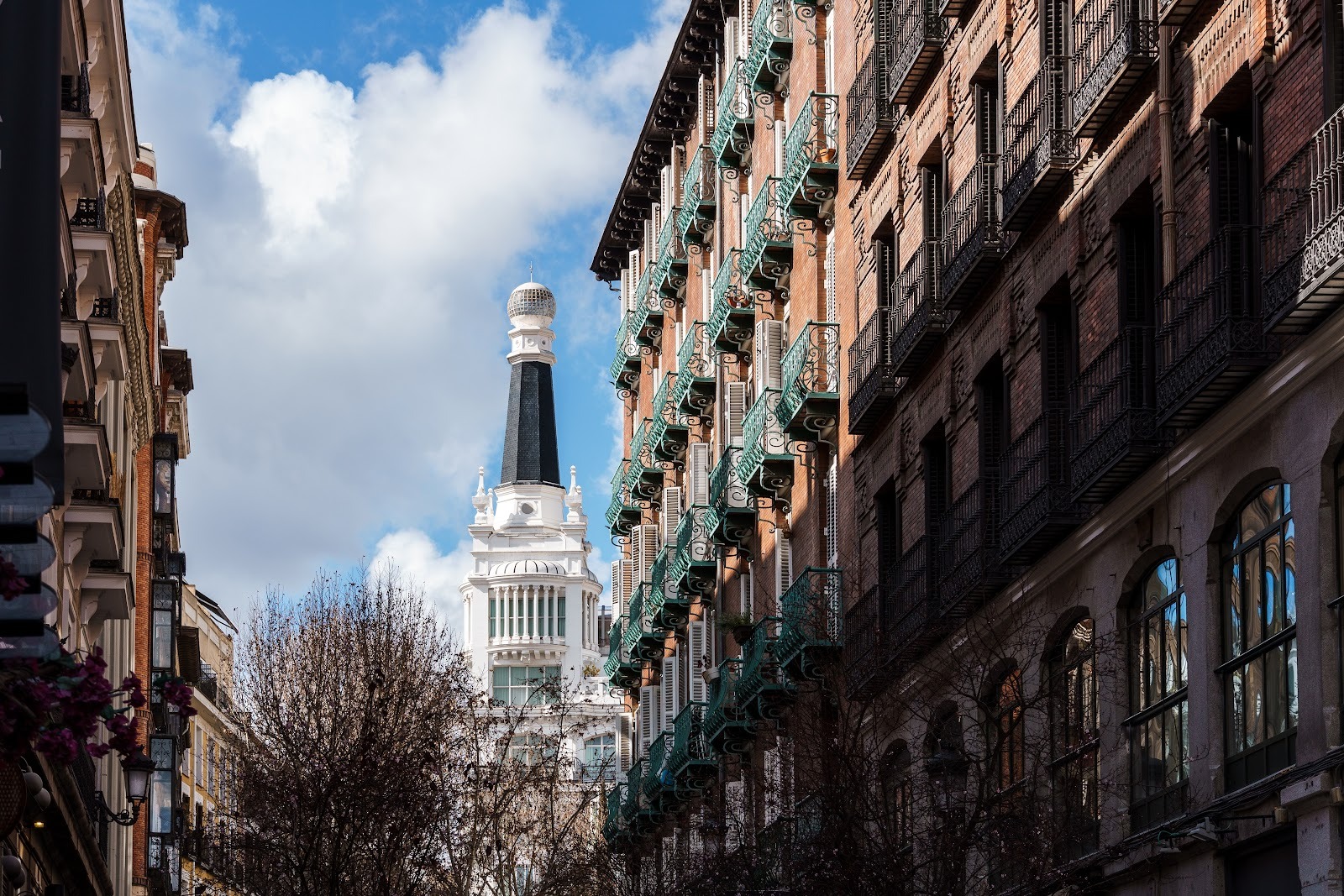
New vs historic is also a real trade-off: newer projects in prime areas may offer parking, gyms and modern systems, while older buildings often have more character and ceiling height but may require more patience and maintenance.
Who should be on your real-estate buying team
At this level, you do not want to improvise or rely on one friendly agent for everything. At a minimum, plan for:
- An independent Spanish lawyer used to working with foreign buyers
- A tax / immigration advisor who understands both your home-country rules and the Spanish system
- A banker or mortgage broker if you’ll be financing
Many international buyers also work with a buyer-side advisor. Someone who represents only the buyer, helps define the brief and budget, privately shortlists properties across agencies, portals and private networks, and coordinates viewings and negotiations.
That’s the niche my firm, Stellium, focuses on: quiet, conflict-free buyer-only support for higher-end purchases in Madrid and Marbella. You can read more or ask for a private conversation at stelliumestates.com – I’m looking forward to hearing from you!

Final thoughts for luxury buyers
As we move into 2026, Madrid’s luxury market is still in good health: price growth has cooled from the post-COVID rebound but remains positive, and international demand is strong in the most established neighborhoods.
Buying a luxury flat here as an American or other foreign buyer is absolutely doable.
The key is to treat it as a life decision, not just a pretty listing: get clear on how you want to live, build the right team around you, and move step by step.
Feel free to reach out to me if you have any questions.
Yours,
Isaac Shahar.
P.S. Note from Daniel: This post is sponsored by Isaac over at Stellium Estates, check them out if you’re in the market for some luxury real estate – like he says at the beginning, although this article is about Madrid, he works everywhere in Spain. He also mentions a few things I strongly believe in, like getting a good lawyer to talk you through all aspects of Spanish bureaucracy. It’ll save you time and money in the long run. Trust us!

0 comments