

It’s time for another bike tour.
Early this year, Raúl from Bike Tour in Spain contacted me to ask me if I wanted to do another one of his cycling tours – this time in La Rioja and along the Camino del Cid.
Despite having never made plans so far in advance, I said yes to an early-September departure.
Why not?
The historical tie-in could be interesting, and I’d never been to La Rioja at all – despite living in Spain for half my life.
A few weeks later my wife Morena announced she was pregnant. But since the baby wasn’t due until mid-November, I had plenty of time to cycle across La Rioja and parts of Castilla.
So I booked the train to Bilbao, in the Basque Country, and set out one sunny morning for the north of Spain.
Raúl’s bike tours are basically “done for you” – he provides the bike, and the helmet, and the accomodation is booked in advance. The hotels have places to keep the bikes – all you have to do is show up and pedal (and feed yourself along the way).
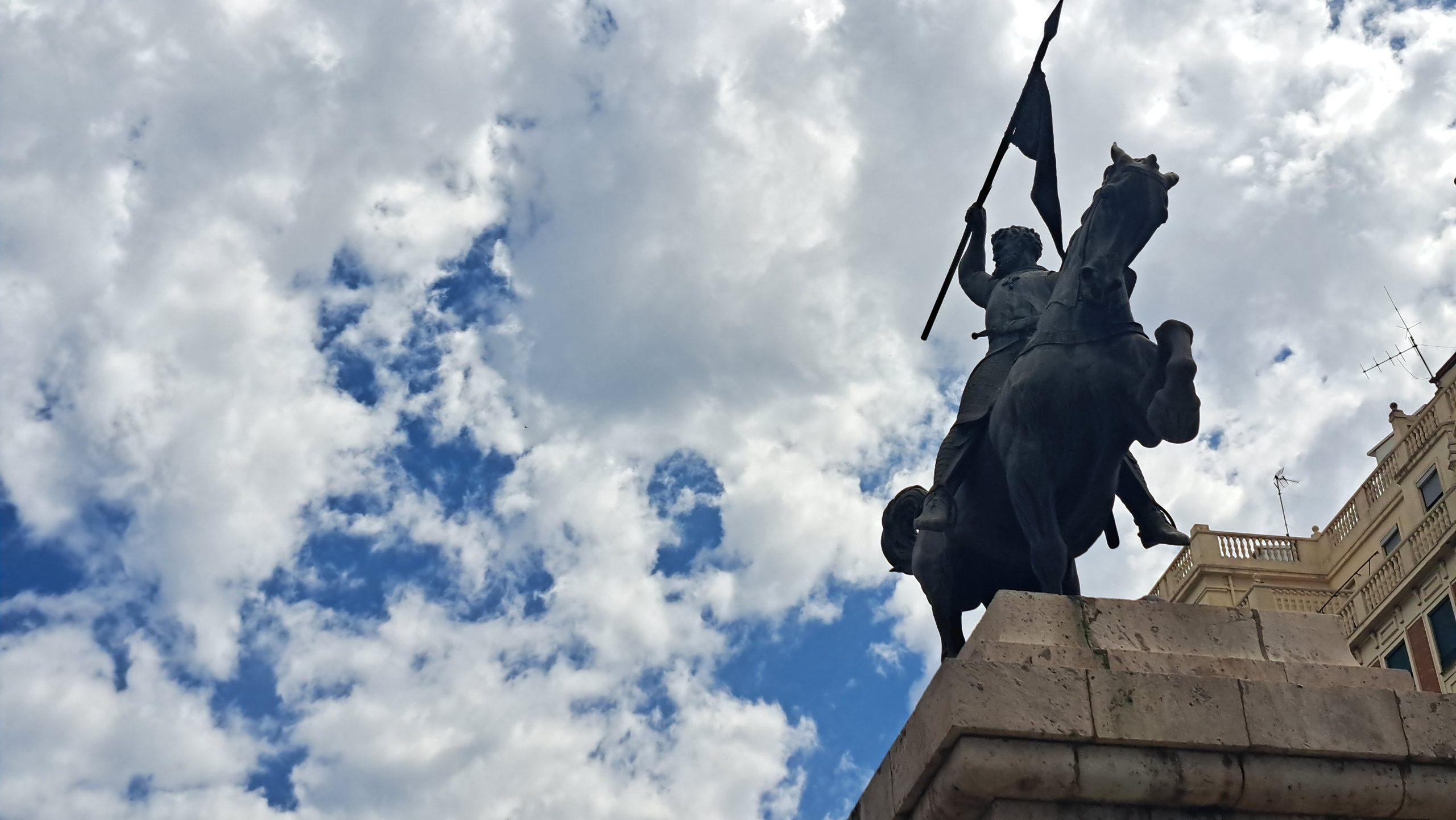
A few weeks before departure, Raúl sends out the final version of the route, so you can download it to a GPS (or the Wikiloc app on your phone) and be ready to go.
My brief stay in Bilbao is another article. Really we’re starting from the town of Peñacerrada – I’ll be accompanied by several Dutch tourists who are all seasoned cyclists.
Peñacerrada to Laguardia
On Sunday morning I find the several Dutch people downstairs at the hotel in Bilbao, with their suitcases and bike helmets.
We get into a couple of taxis waiting at the curb for the trip to Peñacerrada.
The big green hills start just outside the city. This is how the Basque Country has maintained its partial autonomy from the rest of Iberia for the last few millennia: these miles and miles of rugged hills (and mountains) that you’d be hard-pressed to march an army over.
Today’s highways make it a simpler matter, and in about an hour we’re in Peñacerrada, where Raúl is waiting for us with the bikes.
Raúl lived in the Netherlands for a couple of decades, and got into bike touring up there. When he was offered early retirement from his corporate job, he started Bike Tour in Spain to fill a market gap.
Now, a lot of his clients are Dutch because apparently they’re the ones who go on cycling holidays – but people of any nationality can (and should) sign up.
Before we start riding, I should mention that I feel woefully unprepared for this. Some of the Dutch ladies get e-bikes but when I asked Raúl he told me that surely a fit 43-year-old can use a push bike. I don’t know if I’m as fit as he thinks.
But with that vote of confidence we set out towards the edge of La Rioja.
Today there’s only one big hill, and it’s right at the beginning of the route. I try and fail to breathe through my nose through the first five kilometers of forest.
About halfway up the hill another cyclist (unrelated to our group) passes me – he must be 70 at least. So I guess I have no excuse. I stop at the top of the hill, which is the border between the Basque Country and La Rioja, before pedalling down towards the next landmark, an old Romanesque chapel.
In almost 22 years in Spain, this is my first time in La Rioja.
Grape Harvest in La Rioja
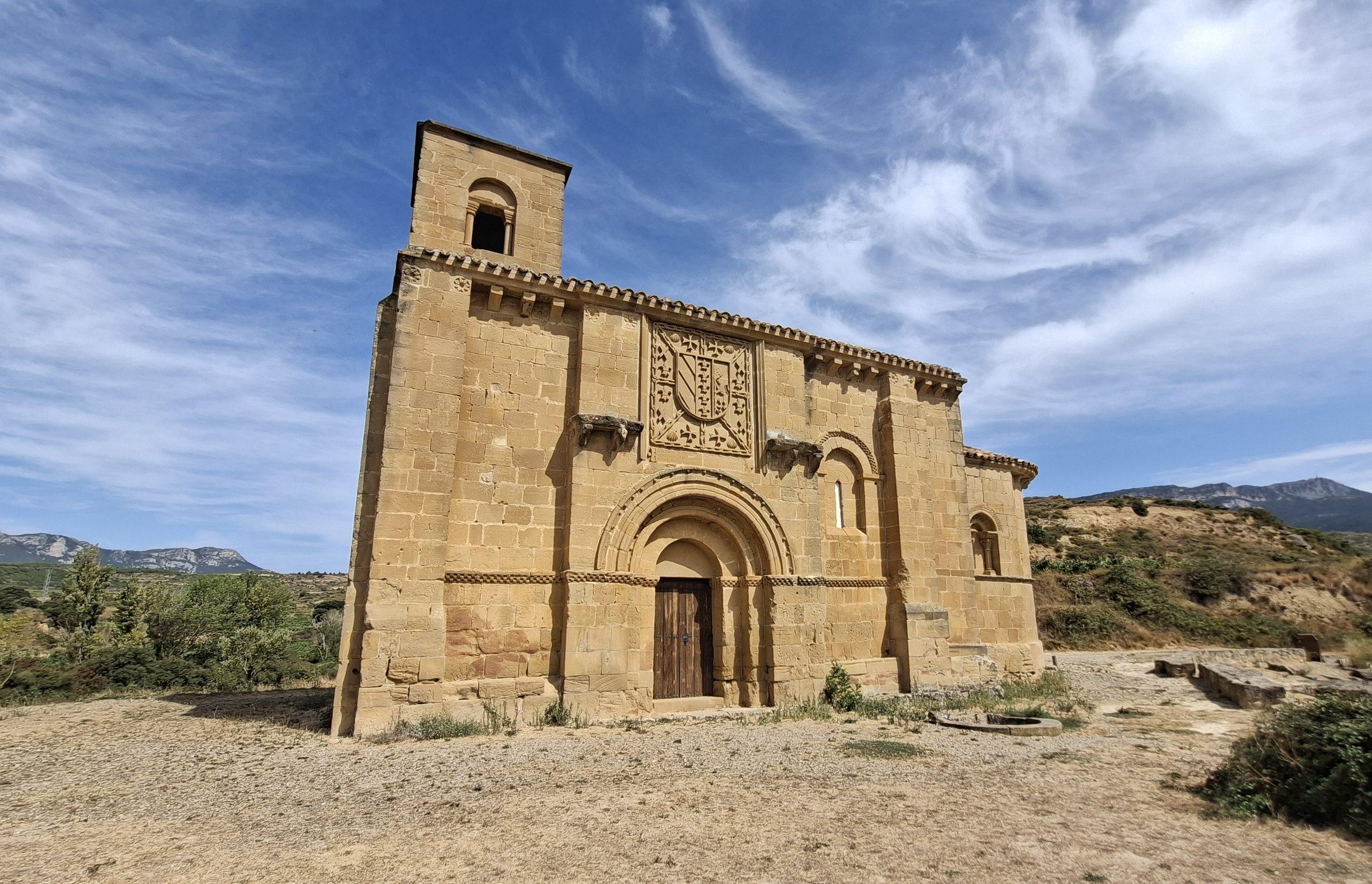
The chapel (la Ermita) is about a kilometer off the highway, up badly-patched road, on a hilltop. It’s called Santa María de la Piscina, and it’s in the Romanesque style.
Romanesque is a type of architecture developed between the 9th and 13 centuries: after the fall of the Roman Empire, but prior to the Gothic and Renaissance periods. It’s humble, not elaborate.
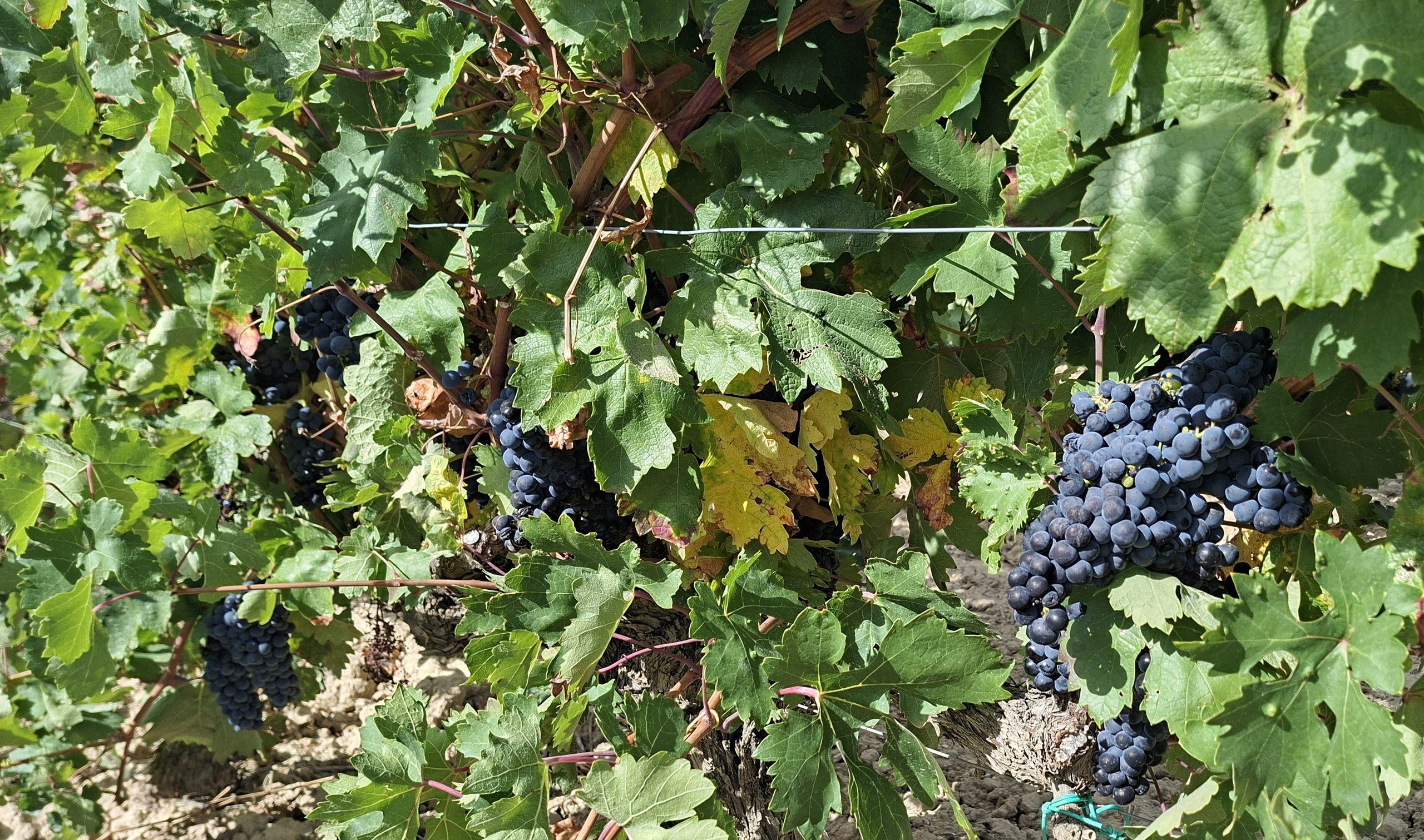
On both sides of the road there are acres and acres of grapes, and after a while, I start to see people out in the fields harvesting them. There’s a strong smell of vinegar where bunches have fallen by the roadside.
The grape harvest – la vendimia, in Spanish – is in August, September or October, depending on what part of Spain you’re in (and what kind of grape you’re growing).
Incidentally, I have a bit of experience picking grapes. My flatmate Pedro from back in the day (before I was even a blogger) was from La Mancha, in the wine country south of Madrid. His family had some land down there, and somehow, they roped me and my then-girlfriend into spending a Sunday on the grape harvest.
The way it worked was, we got up before dawn, to beat the heat, and spent the first few hours of the day hunched over with a pair of shears, filling a big basket with bunches of grapes. (In La Mancha they tend to grow the grapes in bushes on the ground – other places grow taller vines on trellises.)
By about 9 AM it was already hot, and at 10 we stopped for lunch: Pedro’s uncle had made been making some sort of lamb stew over a campfire on the edge of the field. After that it was four more hours bent over the grapes. It was tough, and repetitive, and hot, and in the end we filled up the back of a couple pickup trucks, which we drove to the town co-op.
The co-op weighed the grapes, and measured their sugar content. (They pay more for sweeter grapes, because more sugar can be turned into more alcohol.) The manager of the co-op showed us around, and explained the process. They would buy the grapes from everyone in town, mash them in big concrete tubs and then turn them into some low-quality table wine for sale up in Germany – Vino de España.
Lunch in Baños de Ebro
From what I’m now seeing online, a metric ton of low-end grapes can be sold for around 250€. If your grapes have a Denominación de Origen (like Rioja or Ribera del Duero) they’re more expensive – maybe around 800€ to 1000€ a ton.
These are probably the expensive grapes that I’m riding through now. Either way, most of the people out here bent over the vines are Eastern European or Subsaharan African, and I don’t envy them this job at all.
At midday there’s a stop in Baños de Ebro, a small town next to the Ebro river. In the center there’s a tent set up so that the laborers can get some lunch, and the town bar on the plaza is full. This might be Baños de Ebro’s high season. The guy working the bar is Romanian and seems to know everyone in town. He has alcohol-free beer on tap and his pintxo de tortilla is top-notch.
Outside town I find the Ebro river, and the báscula municipal – that’s the municipal scale for weighing your truck full of grapes. After that there’s little more than a long, slow uphill to Laguardia.
The heat is unseasonable – usually things have cooled down by the first week of September.
In a town along the way I stop under the single tree to drink some water, and an old lady in purple pants and silver shoes walks by, exclaiming “Cuidado hijo mío, ¡que hace mucha calor!” (The word “calor” is masculine in Spanish, but lots of people use “la calor” or “mucha calor” in feminine, to talk about extreme heat.)
Laguardia to Logroño
Laguardia is a hilltop town surrounded by its old wall, in the Basque Country. Our hotel is just outside the gates, and we head into town for dinner – me, Raúl, and the several Dutch people. As usual, I’m trying to get enough protein to feel good about exerting myself again tomorrow.
The Dutch metabolism seems to run on small quantities of bread and cheese, white wine, and vegetables.
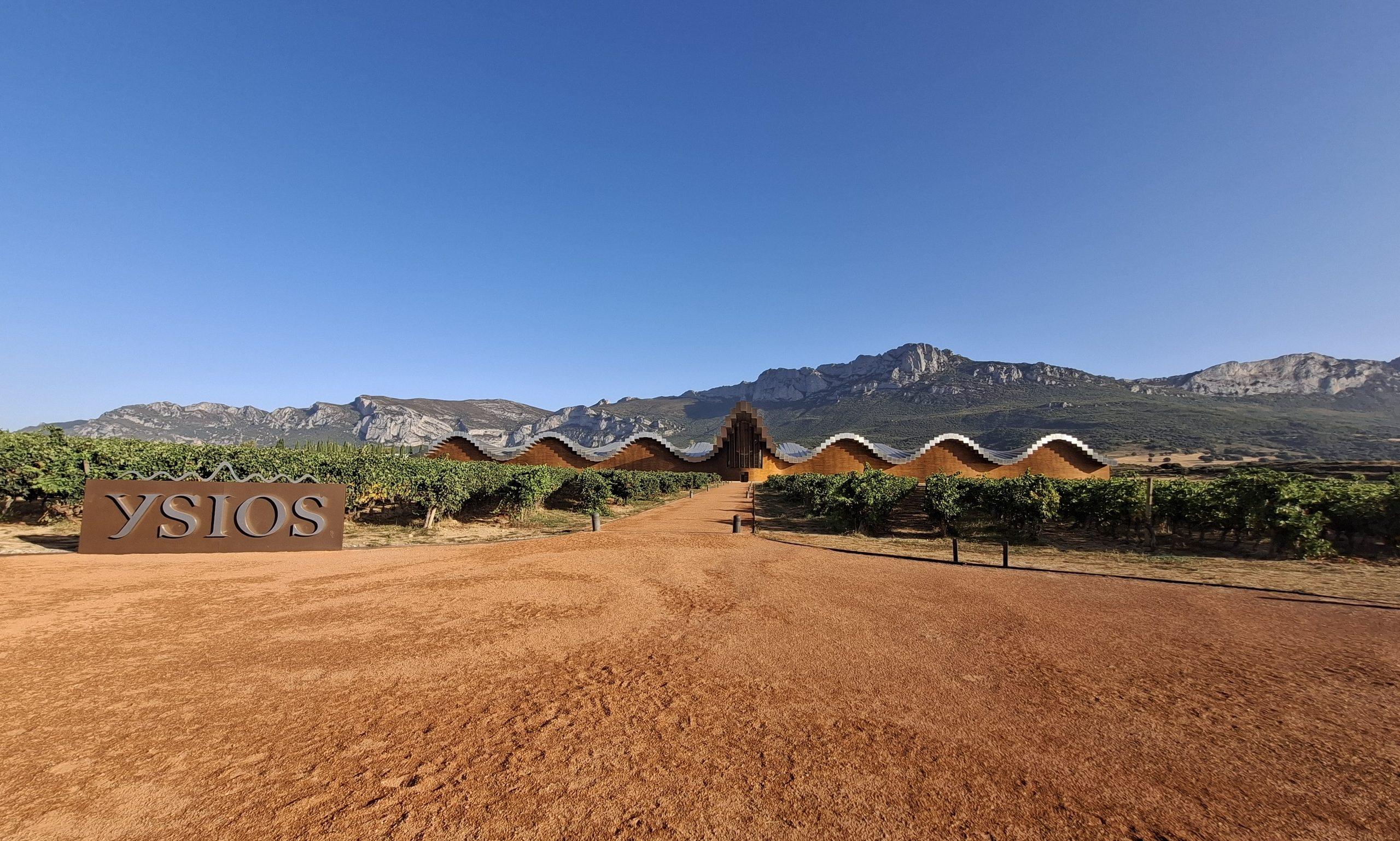
The next morning I start out at 9 to try to get ahead of the heat. The route is only 35km and starts with a circle around Laguardia to see the area. Along the way is Bodegas Ysios, one of the impressive-looking wineries they build to get tourists out here. If you’re a wine drinker, I’m sure Ysios is nice. The building looks like a pixellated wave off in front of the mountains.
Although we’re in the Basque Country, signs call this area “La Rioja Alavesa”. Álava is a Basque province, and it turns out the denominación Rioja used for wines doesn’t line up exactly with the Spanish Comunidad Autónoma of La Rioja.
After coffee in Lapuebla de Labarca [sic], I ride down and cross the Ebro, leaving Basque Country behind and entering La Rioja proper. The Ebro is one of the great Spanish rivers, draining into the Mediterranean south of Barcelona.
Hoping to save my sore legs, and skip the one hill on today’s route, I take a shortcut along one of the Vías Verdes – old train tracks that have been decommissioned and paved over. They’re usually flat and smooth, and this one is no exception – it winds along above the Ebro with a nice panoramic view.
But after a few kilometers the Vía Verde runs out, and I end up having to do the hill anyway. The churchbells are striking 12 behind me as I push the bike up a little path in the heat.
The hill isn’t even that bad. I guess the lesson is to just follow the route Raúl gave me on GPS, and not get creative. (Still, the view of the river from the Vía Verde was pretty nice.)
Many Americans in Logroño
The hotel Raúl has booked for us is overlooking one of the bridges into Logroño. Specifically, it’s the bridge where the Camino de Santiago enters town.
You can see backpackers crossing all afternoon – last year, more than half a million people arrived in Santiago, after doing one of the Camino routes. Logroño is on the Camino Frances, the most popular of all of them.
Raúl congratulates me when I arrive. Apparently I’ve made good time, which is a surprise, because I assumed all the Dutch people had passed me while I did my senseless detour.
I leave my bags and go out to explore. Passing through town you can see the yellow shells marking the Way. Two Americans are outside the municipal hostal for pilgrims, confused about how to get in. They ask a street-sweeper who’s standing nearby but he doesn’t speak English. They’re exceptionally loud, these Americans. I hope they got a place to sleep.
Speaking of Americans in Logroño, I’ve arranged to meet another YouTuber – Bruce Hamilton, who’s living here with his wife and two kids. We meet on Calle Laurel, one of the most famous “pincho streets” in all of Spain.
Over some of Logroño’s iconic mushroom tapas, Bruce tells me about the burgeoning American expat scene in La Rioja. Apparently, some other YouTubers have made this a cool place for Americans to live, and people are arriving in droves.
Later, we cycling tourists have a walk around the center of Logroño, organized by Raúl. The tour guide, Vanessa, meets us in the hotel lobby, and takes us to an exhibit about local wine, and then to the co-cathedral, which has a small painting by Michelangelo.
El Calvario is a picture of Christ nailed to the cross and looking up with imploring eyes. It was painted by Michelangelo for his friend, the poet Vittoria Colonna, who has quite a story of her own. After Colonna’s death, Michelangelo got the painting back and added his late friend as Mary Magdalene, on her knees at the foot of the cross. The painting was later brought to Logroño by a local bishop, Pedro Gonzalez de Castillo, who’s buried in the same co-cathedral.
On a lighter note, the tour guide also explains the local expression “¡Los tienes como el caballo de Santiago!” by pretending to cup a pair of giant balls in her hands. (The phrase refers to someone who’s very brave.)
The Church of Santiago in Logroño has a statue of Santiago on horseback way up on its façade, and wouldn’t you know it, the horse has really big balls.
After the tour I head back to Calle Laurel for some more pintxos, before calling it an early night.
Cabrejas to Burgo de Osma
From Logroño we take a minibus through Soria to another ermita near the village of Cabrejas. Raúl meets us there with the bikes. We’re heading into some high altitude and the forest is thick and green and the air is feeling a bit thinner.
Soria is the least-populated of all 50 Spanish provinces, with just 8.7 people per square kilometer. It’s also one of the oldest – 6% of the population is over 85 years old.
When people talk about España vacía, this is what they mean.
After several kilometers of forest we reach the high plateau. This is one of the typical Spanish landscapes: la meseta, with a few trees dotted around. The grapes are behind us now, and the fields are full of hay. The weather is much cooler, and the clouds float majestically in the sky.
The big hill today looks hard on the GPS, but it’s pretty easy in reality. We pass through a series of small towns, which mostly seem to be abandoned. Some of them don’t even look inhabitable.
Today’s route has a shortcut which shaves off more than 20km – I decide to take it and save my legs. (The Dutch people, although mostly in their 60s and beyond, have great endurance, and they do the full route.)
Burgo de Osma
Burgo de Osma has a population of around 5000. And it’s not a dying town – that’s a small increase over historical numbers. Surprisingly, it has its own cathedral – the big church in the provincial capital of Soria is just a co-cathedral.
Founded at the confluence of two rivers on the high Castilian plain, the area has been inhabited by Celtiberians, Romans, Visigoths, and everyone else. It was sacked by one of Napoleon’s generals in 1808, and was the site of battles during the second Carlist War. In other words, it’s been around forever.
We’re staying in one of the most impressive buildings in town, the old university of Santa Catalina (founded in 1541). It’s now a fancy hotel with a spa downstairs. I’d never heard of Burgo de Osma before now, but it looks like Spanish pijos come here on vacation.
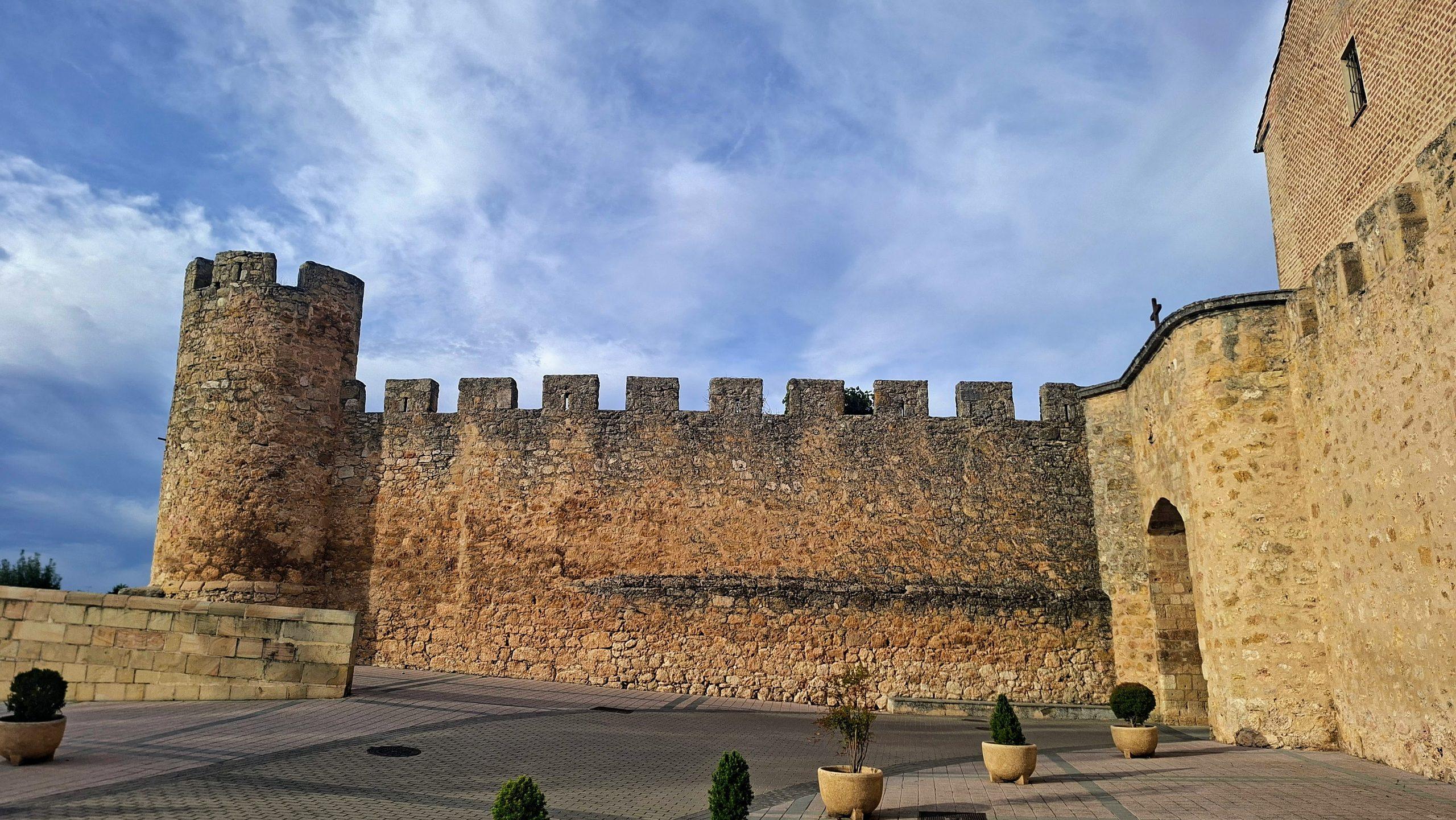
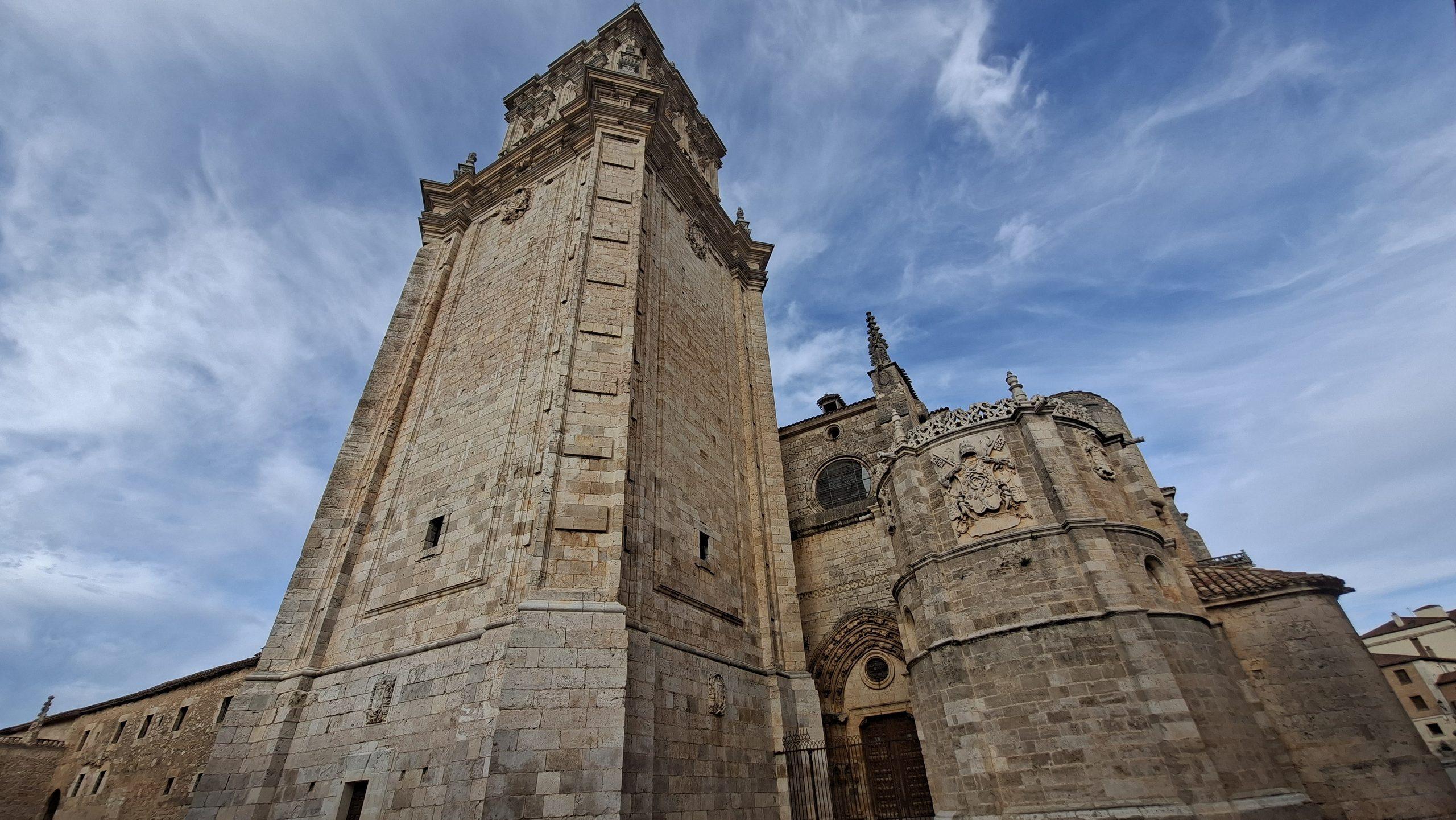
I go out to see the cathedral, which has an exhibit about a local saint, San Pedro de Osma – actually, he turns out to be the founder of the town. Then I relax in the grassy park next to the river. There’s a view of part of the old city wall from here, and two young girls are filming some choreographed dance in front of the bridge. I have a meal of torreznos (a local specialty – like pork rinds but better). Finally, I sit in the plaza del Ayuntamiento and call my wife Morena.
I’m pleased to see there are plenty of people around, small children included.
Morena is at home, several months pregnant, so the topic of our conversation is baby prepping. She’s thrilled to have me out of the house, she says, because once we have our daughter, she may not be getting any time alone for the next 18 to 35 years.
Cycling on the Camino del Cid
Rodrigo Díaz, otherwise known as El Cid, is one of Spain’s national heroes.
As far as I can tell, the historical Cid was a warlord whose “job” was to attack and lay siege to cities. Once they submitted, he’d tax them a yearly rate for protection.
For a time in his early career he did this on behalf of the Muslim rulers of some of Spain’s cities. Afterwards he allied with Christian King Alfonso VI, but after falling out with Alfonso, el Cid became an independent lord. He conquered Valencia – it’s a bit of a long story – and died in 1099.
To his body were attributed a series of miracles, but he’s not a saint.
Still, in legend, el Cid is a pious Christian warrior, motivated by his faith to reconquer the lands of the Muslim usurpers. In reality, he just seems to have been a guy who was good at fighting, although of course he sponsored churches and monasteries with the wealth he accumulated.
His life was commemorated in one of the most important early Spanish epic poems, el Cantar de Mio Cid, written around the year 1200. This was convenient at the time because Spain needed heroes in the battle against the Moors. (It was also convenient for the monks who kept el Cid’s body in their monastery – relics of a hero meant pilgrims would arrive, and would bring donations.)
Much later, Franco’s dictatorship would celebrate El Cid as a hero of Spanishness – the Reconquista fought against the Moors, as I’ve mentioned several times, is the Spanish national origin story. Franco’s propaganda, in the mid-20th century, took the line that the Spanish Civil War was a sort of second Reconquista, in which the forces of rationality beat back the barbarians to usher in a new Christian golden age.
There’s also, if you’re interested, a movie about El Cid starring Charlton Heston and Sofía Loren. I’ve never seen it, but the reviews I’ve read suggest it’s one of the best historical epics ever made.
The last three days of our cycling route, from Burgo de Osma to Sigüenza, are on the Camino del Cid route, which is loosely based on places mentioned in el Cantar del Mio Cid.
Bike tour from Burgo de Osma to Berlanga de Duero
The route out of Burgo de Osma starts by following the left bank of the Ucero river, and it’s cold this morning.
I’m out early, and pedalling through some odd rock formations, and then a huge industrial apple orchard with all the trees covered in black netting. There aren’t any provisions along this route, so I’ve got my panniers full of chorizo and tinned sardines. The route description Raúl’s given us compares this area to the landscape in movies about Little Bighorn: empty fields with dramatic stone mesas in the distance.
We pass through the village of Navapalos, an example of local adobe architecture, population 6. It’s mentioned in el Cantar del mio Cid, and in an 18th-century census listed 37 inhabitants. After it was abandoned in the 20th century, a German called Erhard Rohmer tried to organize some volunteers to preserve the village, with limited success. He’s memorialized on a plaque on one of the walls we ride past.
In Caracena Raúl is waiting for us with a picnic – in case I haven’t mentioned it, this Rioja route is van-supported because the towns are quite remote. The Dutch people eat two slices of bread each, with a bit of cheese.
Caracena’s one bar is closed, although the woman who lives in the building comes out at some point to shout for her dog. The church, however, is opening when we arrive – it’s another beautiful (and small) Romanesque chapel, with twisted columns on the far side and some interesting old paintings.
Beyond the church is a ruined castle – just the outer walls are standing. In El Cid’s day these castles up on hilltops would have been important for strategically controlling the area around them. Now it seems there’s not much to control.
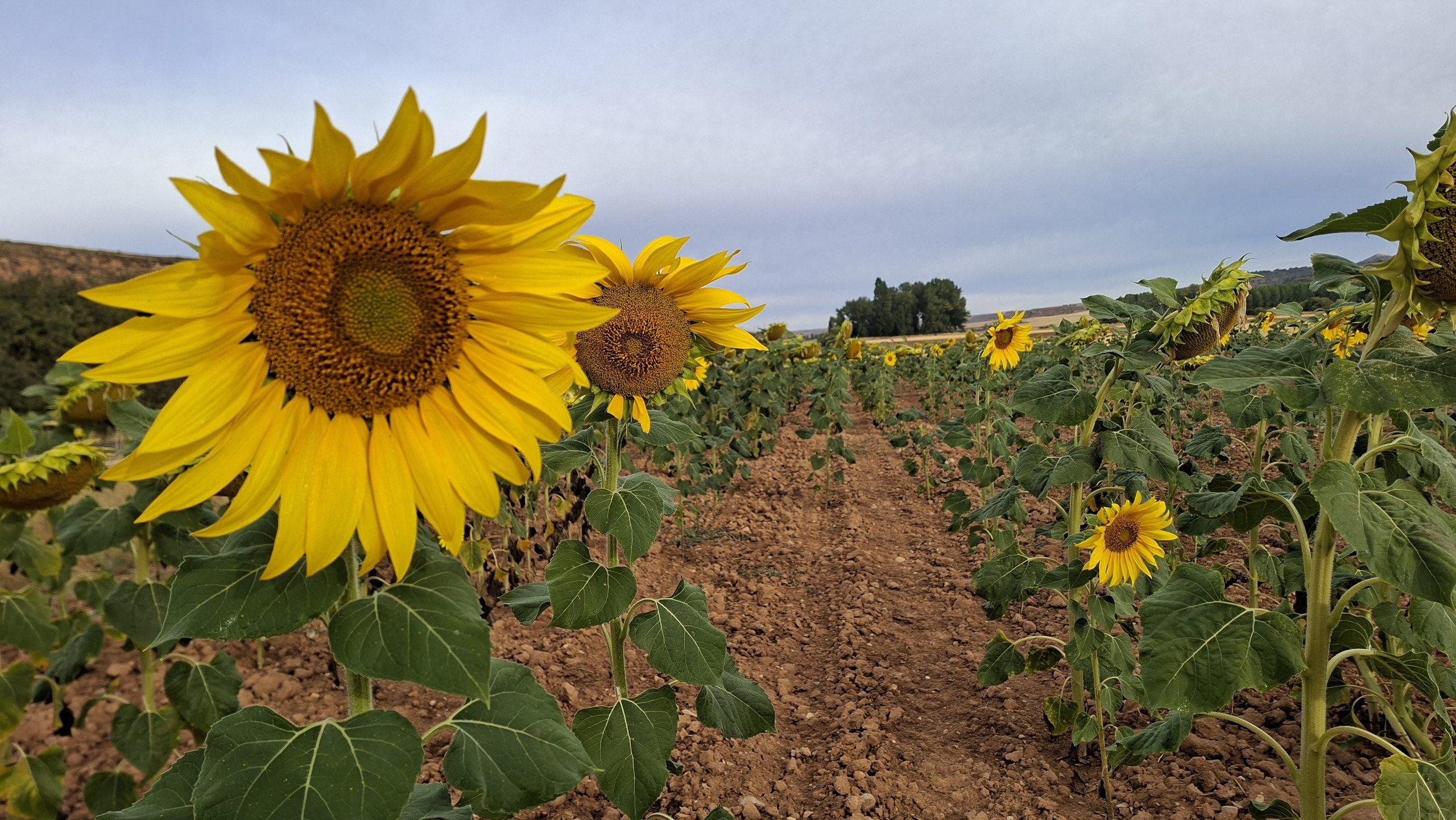
Later, near the town of Gormaz, we cycle briefly long the Duero river: that’s the one that flows through the Ribera del Duero wine region and then on to Oporto in Portugal. The route goes through fields of sunflowers – mostly dead at this time of year, their heads hanging and waiting for the harvest.
Berlanga de Duero
According to tradition, El Cid was the first mayor of Berlanga de Duero, back in the year 1089. There’s a plaque suggesting this on the city hall to this day.
Also, El Cid’s wife Jimena and his daughters stayed here while the hero was off on his Valencian campaigns. In other words, it’s a place with a lot of history. Saddle sore from sitting on the bike all morning I arrive with a few of the Dutch people in the main square, and we sit for half an hour and have beer and torreznos.
Raúl’s rented a small hotel for the group, and later we stash our bikes inside. The woman running the place (who’s Dominican) laughs when she sees my Spanish ID card. I may not look it, but I’m as Spanish as anyone else these days. Maybe as Spanish as el Cid himself.
My room looks over the massive church called Colegiata del Santa María del Mercado, completed in 1530. I’ve never heard of Santa María del Mercado, but there’s a Santa María for all occasions, I guess.
Inside the church (right next to the door) is an artifact that’s become symbolic of the whole town: el lagarto de Fray Tomás is an alligator – technically a caiman – brought back by a local priest who went off to the New World and discovered the Galapagos Islands. Legend says that once in Berlanga, it escaped and started devouring the town’s virgins at night.
As a result, it was killed and hung in the church to exorcise its demons.
Cycling from Berlanga to Atienza
The morning starts with long straight roads and low clouds. Some of the sunflowers along this route are still alive. We go through Caltojar, which has several Picasso-style murals on the main street through town.
I turn off towards a town called Rello, which has a well-preserved old town. The official population is 21, with a few dozen more coming out in the summer. At least four ladies are out and about today, and I feel a bit out of place in a town that looks like it doesn’t receive many tourists.
Near the town’s only bar (which is closed) is an iron post of the sort locals will tell you was used for hanging. Raúl’s directions call it a “pillory”, and apparently it’s the only metal pillory in Spain. The Spanish word is picota or rollo jurisdiccional and usually they’re made of stone. This one is made from and old cannon, and a nearby sign says it represents the right to mete out justice. So maybe it was used for hanging after all – or at least the public flagellation of criminals.
In the nearby town of Barcones, the split door to the Ayuntamiento is open at the top. I guess locals can stick their head inside if they have business with the Mayor. A bit further along, I see a flock of a couple hundred sheep (and a few goats) being herded by a guy in a blue tractor.
By the time I cycle past the castle and into Atienza it’s gotten hot and I’m ready for a break from pedaling.
Relaxing in historic Atienza
Atienza is a small mountain town with a triangular plaza and a few bars and restaurants.
I drop the bike off at the hotel and head to the busiest of the lunch options I saw coming into town. The other customers at the bar seem to be an odd mix of construction workers, bikers, and forestry agents. I order a giant plate of migas – old-timey shepherd cuisine made of bread crumbs, bacon, and raisins, and topped with a couple of fried eggs. It’s one of the typical dishes in central Spain, and pretty good, given that it was probably just invented as a way to use three-day-old bread.
Here in Atienza we seem to be on El Camino del Cid, as well as el Camino de Santiago, and also La Ruta de Don Quijote for good measure. (Raúl sent me on the Route of Don Quijote a few years ago, but further south, in La Mancha.)
I go back to the hotel and try to sleep, but I’m being attacked by two flies in the room, so I give up after a while, and go out to buy some chocolate napolitanas – the Spanish equivalent of Pain au chocolat – and sliced ham.
All this cycling has made me extra hungry.
Then I explore the town to discover the answers to important questions such as: Does Atienza really have a street named after General Franco?
Answer: No. Google Maps says so, but the street signs say something different.
(An article from 2019 in the newspaper ABC says that the local mayor had called a vote in the town of 500 over the renaming of the street. I suppose the motion was successful, and Google doesn’t update places like this very often.)
That evening, we have another group dinner, which means another large steak for me. My legs are feeling strong, and I guess I’ll get through this thing.
Tomorrow’s the last day of the tour.
Atienza to Sigüenza
The sun rises bright and orange in Atienza, and the road proceeds between rows of poplars.
I leave the hotel a bit ahead of the Dutch people, but on the hill the two fastest among them catch up to me. A bit of company gets me pedalling faster. I just follow the cadence of the guy ahead of me, and its hard, but doable.
Outside the town of Sienes is a detour on a gravel road – the highway out of town is under construction.
We’re moving between the provinces of Guadalajara and Soria today, on our way to the medieval city of Sigüenza. Raúl has organized a final picnic for us at a rest area next to some cliffs (and another little chapel). I ask him about the trees. In Spanish, they’re “álamos” and I’d always called them cottonwoods, because they grow along rivers like the cottonwoods back in Arizona.
Raúl points out that an area with a lot of álamos is an alameda, which I never knew. And today I learn that “all cottonwoods are poplars, but not all poplars are cottonwoods.” In other words, the taxonomic family of trees known as Populus includes poplars, cottonwoods, and aspens.
After a snack of bread with chorizo, I’m ready for the final part of the trek. The final sunflower fields and the last bits of hill before Sigüenza. I walk part of the hill, pushing the bike. I probably could have done this 5 days ago, but on day 6 of 6 I’m a bit tired.
Around 1PM I’m pedaling along the shady streets of Sigüenza.
Medieval Luxury at the Parador de Sigüenza
Sigüenza is a popular day trip from Madrid, but it’s one I never did in my many years living there. Today it seems to be full of weddings. The Parador where Raúl has booked us is in the old castle, and when I arrive an American guy with a lot of hair gel is trying to explain to the girls at the desk that he absolutely needs his clothes ironed by 5PM.
They seem puzzled by the urgency, and I agree, but then again, I’ve never really seen the point of ironing.
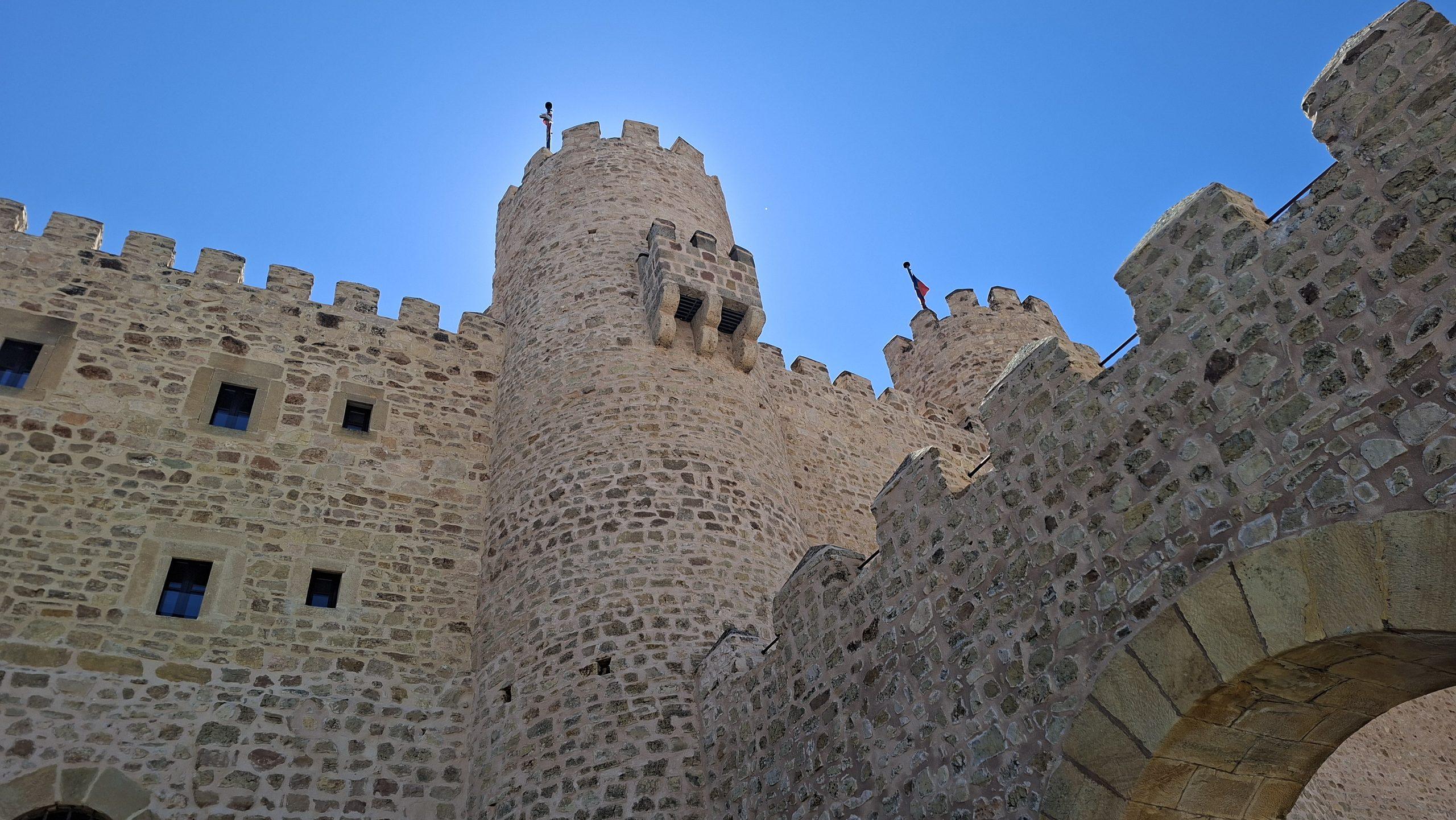
The Castle of Sigüenza is one of the most impressive buildings ever. On a hilltop at the edge of town, it’s huge, and it’s been restored to its full 12th-century glory after being mostly destroyed by the French during their invasion in 1811, and further destroyed during the Spanish Civil War.
The hotel inside is as luxurious as you could want. My room has one of the tiny slit windows that archers would have used in the Middle Ages – apparently most of the rooms do, because castles just don’t have big windows.
More Bike Tours in Spain
And just like that I’m done. Raúl takes the bikes and drives off in his van… until next time.
You can sign up for one of Raúl’s bike tours at biketourinspain.com – he’s got several routes to choose from at this point.
(I’ve done this one, called “La Rioja and Camino del Cid”, as well as the Route of Don Quixote, and also Extremadura, which I talked about in another article.)
I enjoy these types of holiday – it’s nice to get in some cardio while otherwise having a relaxing day in the countryside. So as usual, I recommend you take a bike tour.
Tell Raúl I sent you, and enjoy!
Yours,
Daniel AKA Mr Chorizo.
P.S. In other news, our baby is coming soon. So stay tuned for updates. Maybe follow me on Instagram or something, because I doubt I’ll have time to make a lot of podcasts for the next couple of months. OK bye.

0 comments